
Moldex 7000 / 9000 Series Filters & Cartridges
FILTERS & CARTRIDGES
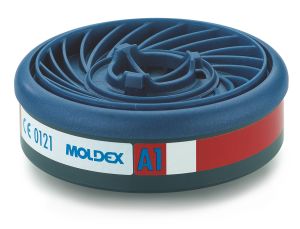
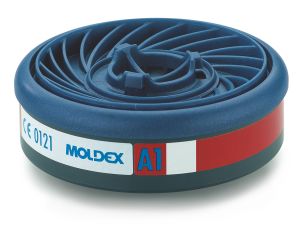
A1 Filter Cartridges- Organic gases and vapours, boiling point > 65°C Working with solvents created by varnish, paints and adhesives 1000PPM
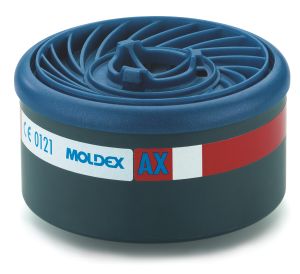
AX Filter Cartridges - Organic gas (BP65%c)
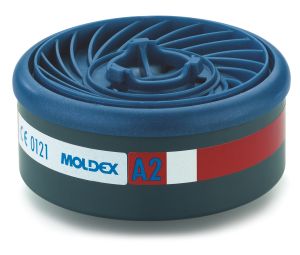
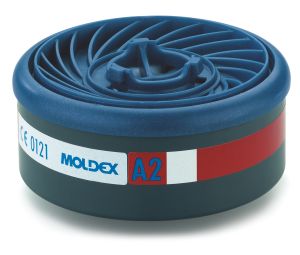
A2 Filter Cartrdiges- Organic gases and vapours, boiling point > 65°C Working with solvents created by varnish, paints and adhesives 5000PPM
ABE1 Filter Cartridges -Organic & Inorganic gases and vapours & Acids, boiling point > 65°C Working with solvents created by varnish, paints and adhesives & chlorine,bromine, hydrogen sulphide, hydrochloric acid and other acids 1000PPM
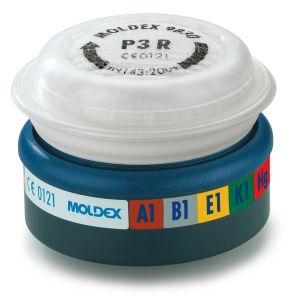
ABEK1 Filter Cartridges-Organic & Inorganic gases and vapours & Acids, boiling point > 65°C Working with solvents created by varnish, paints and adhesives & chlorine,bromine, hydrogen sulphide, hydrochloric acid and other acids& Ammonia
ABEK1 HG P3 RD Filter Cartridges-Organic & Inorganic gases and vapours & Acids, boiling point > 65°C Working with solvents created by varnish, paints and adhesives & chlorine,bromine, hydrogen sulphide, hydrochloric acid and other acids& Ammonia & P3 Particulates plus Mercury (50 hrs Maximum use against Mercury.
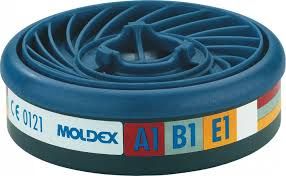
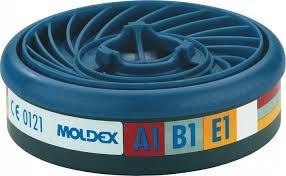
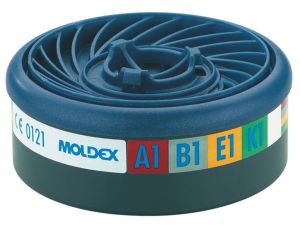
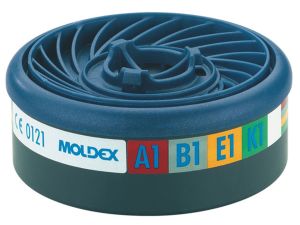



Featured


Frequently Asked Questions
01. Do Moldex 7000 and 9000 series filters fit the same masks?
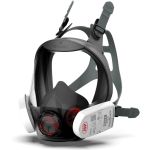
Yes. Moldex 7000 series half masks and 9000 series full face masks share the same EasyLock bayonet filter system, so the same filters and cartridges fit both. This means you can standardise on one filter stock across your team even if some wearers use half masks and others use full face respirators.
02. What is a P3 filter and when do I need one?
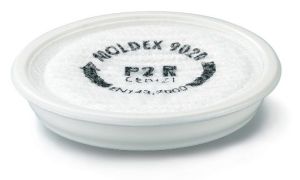
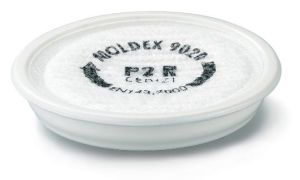
A P3 filter is the highest particulate filter class under EN 143, capturing at least 99.95% of fine dust, fumes, mists and fibres. It's the standard choice for tasks generating fine airborne particles, such as cutting, grinding, sanding and powder handling, where lower P1 or P2 filters wouldn't provide adequate protection.
03. What's the difference between A2, A1B1E1K1 and ABEK filters?
The letters indicate which gases and vapours a filter absorbs. A covers organic vapours, B inorganic gases, E acid gases and K ammonia. The number indicates capacity: A1 is low capacity, A2 medium. An ABEK filter covers all four groups, while A2 alone suits organic vapour tasks like solvent-based paint spraying.
04. How do I know which Moldex filter I need?
Your choice depends on the substance identified in your COSHH assessment. Use a P-class particulate filter for dusts, fumes and mists; a gas filter (A, B, E or K) for vapours and gases; or a combination filter where both hazards are present. Always check the substance safety data sheet before selecting a filter class.
05. How long do Moldex filters last?
Particulate filters should be changed when breathing resistance noticeably increases or the filter is damaged or soiled. Gas and vapour cartridges have a limited service life once the seal is broken, even if lightly used, and should be replaced according to the manufacturer's guidance or your workplace's documented change-out schedule.
06. Can you clean or reuse Moldex filters?
No. Filters and cartridges are consumable items and must never be washed, blown out with compressed air, or otherwise cleaned, as this damages the filter media and destroys its performance. Only the mask body itself is cleaned and reused; filters are replaced once expired, clogged or contaminated.
07. Do Moldex filters have an expiry date?
Yes. Moldex filters carry a use-by date printed on the packaging, typically several years from manufacture when stored sealed in cool, dry conditions. Once the seal is opened, shelf life shortens considerably, particularly for gas and vapour cartridges, so record the opening date and follow the manufacturer's in-use guidance.
08. What's the difference between a pre-filter and a main filter?
A pre-filter is a thin particulate layer fitted over a gas or vapour cartridge to capture dust and mist before it reaches the main filter. It's cheap to replace and extends cartridge life in dusty conditions, such as spray painting, but it isn't a substitute for a properly rated P-class filter on its own.
09. Do Moldex filters meet UK safety standards?
Yes. Moldex particulate filters are tested to EN 143 and gas and vapour cartridges to EN 14387, the recognised UK and European standards for respiratory filters. Check the filter carries a clear class marking (such as P3 or A2) along with CE or UKCA marking before use.