
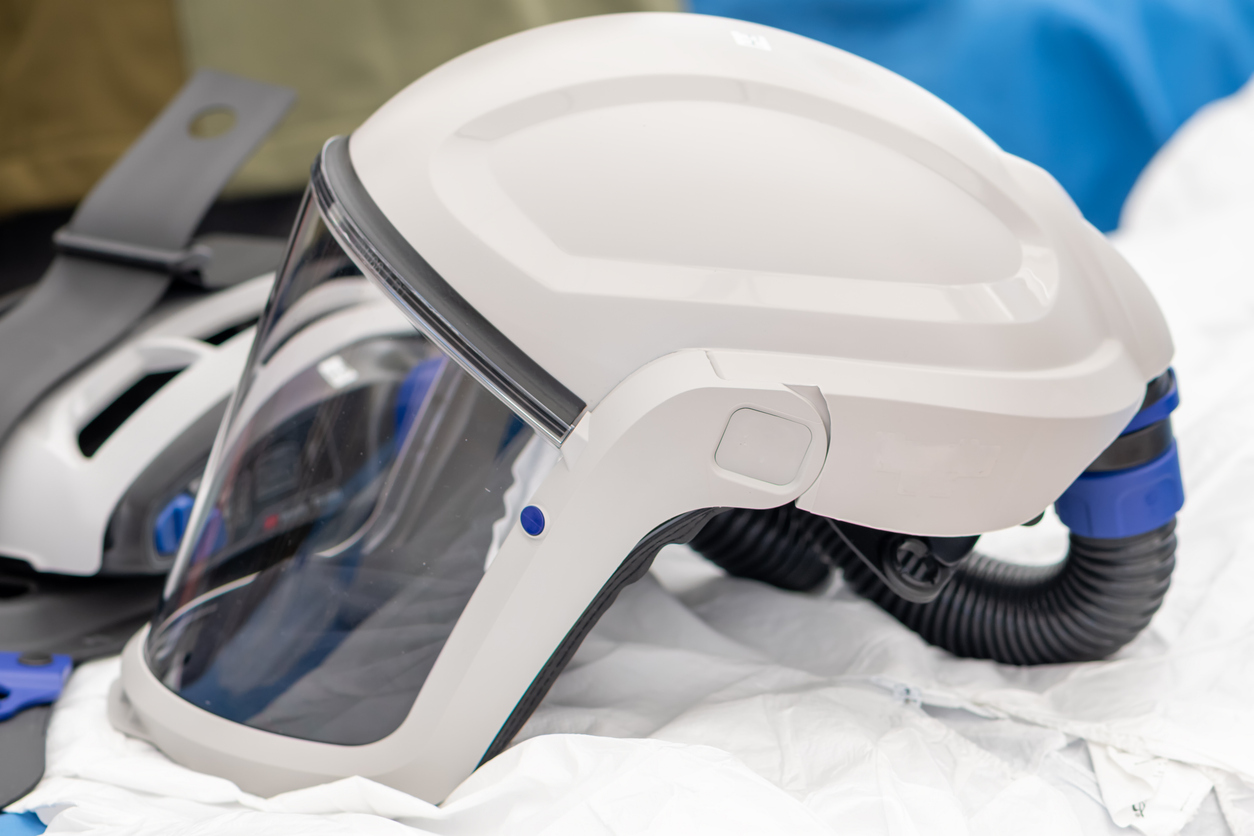
Workplace dust exposure is a constant hazard in construction and manufacturing. Prolonged inhalation of hazardous airborne particulates damages respiratory systems permanently. Equipping operatives with a certified air powered respirator protects worker health and maintains strict regulatory compliance.
Protective Masks Direct understands the demands placed on health and safety managers. We have spent over eighteen years supporting enterprises through industrial challenges. Our company guided clients through global health crises like SARS and COVID-19. Standards dictate all workplace safety protocols. You must equip teams with gear meeting rigid compliance standards.
We supply FFP2 and FFP3 respirator masks alongside comprehensive protection kits. Procurement teams require dependable respiratory protective equipment to maintain operations. Securing the correct unit prevents costly downtime across industrial sites. This guide details the essential technical criteria for purchasing protective airflow systems.
What defines an effective air powered respirator?
An air powered respirator uses a battery-operated motor to draw contaminated air through a filtration unit before delivering clean air to the wearer. This positive pressure mechanism prevents inward leakage of harmful particulates. Continuous airflow reduces breathing resistance during heavy manual labour.
Positive pressure devices remove the physical strain associated with unpowered FFP3 face masks. A powered respirator delivers a steady stream of filtered air directly into the headtop. Industrial trades rely on this continuous supply during extended shifts. The motor sits securely on a heavy-duty belt.
Safety workers operating in asbestos removal depend on consistent airflow to block microscopic fibres. Evaluating motor output ensures the unit can handle specific workplace demands. Essential features to verify include:
- Motorised fan units with variable speed controls
- High-capacity particulate filtration chambers
How do filters dictate workplace protection levels?
Filters determine the exact type of hazardous materials a powered respirator can successfully block. Particle filters remove solid dust and liquid aerosols from the environment. Gas filters absorb toxic vapours and chemical fumes.
Procurement operations teams must match the filter classification to the exact site hazard. Airborne dangers vary significantly across metalworking and woodworking. Welding environments produce microscopic metallic fumes requiring high-efficiency particulate absorption. Regular replacement schedules guarantee consistent respiratory protection.
Operatives must understand maximum usage times for gas filters. Healthcare professionals and laboratory workers require specific filtration parameters to safely handle biological hazards. Common industrial filters include:
- High-efficiency particulate absorption pads
- Advanced gas filter cartridges
Why is the Sundstrom SR 500 PAPR recommended for industrial sites?
The Sundstrom SR 500 PAPR is a heavy-duty fan unit designed specifically for extreme industrial environments requiring reliable respiratory protection. It provides continuous filtered airflow when paired with the SR 580 headtop. This combination delivers exceptional dust protection and accepts extra filters against fumes.
Industrial trades demand equipment built for harsh conditions. The Sundstrom unit integrates into high-risk zones. Welding and metalworking introduce complex atmospheric hazards daily. The system supports two identical filters simultaneously to maximise clean air delivery.
Woodworking operations generate volumes of fine sawdust. The SR 580 headtop includes a durable polycarbonate visor for complete eye defence. Workers remain safe from flying debris. Key specifications include:
- Dual filter configuration for maximum airflow
- Integrated bump caps for overhead protection
Are there bulk supply options for large enterprises?
Protective Masks Direct offers bulk deal savings for businesses requiring large quantities of respiratory protective equipment. Equipping an entire workforce demands a predictable supply chain. Large organisations can reduce procurement costs by purchasing bundles directly from our category pages.
Contact our support team to arrange industrial supply contracts. We stock extensive catalogues of protective clothing. Fire sprinkler system design installations often require comprehensive personal protective equipment sets. Life safety systems demand absolute compliance across all departments.
Browse our online store to secure standard corporate pricing immediately. Purchasing direct ensures rapid UK delivery for urgent requirements. We supply mechanical contracting firms with bulk fire suppression safety kits.
What battery specifications ensure uninterrupted shift coverage?
Battery capacity governs the operational duration of any air powered respirator. Standard lithium-ion batteries provide roughly eight hours of continuous motor operation. High-capacity power packs extend this runtime to twelve hours for prolonged industrial assignments. Rapid charging capabilities minimise equipment downtime between demanding shifts.
Mechanical contracting environments operate on strict timelines. Workers cannot pause fire suppression system installations to recharge fundamental respiratory gear. Health and safety managers must audit battery performance before deployment. Cold environments reduce standard battery efficiency significantly.
Procurement teams should purchase spare batteries to maintain uninterrupted workflow across sites. Intelligent chargers condition power cells to extend total lifespan. A low battery alarm provides a vital safety warning in toxic environments.
Why is face fit testing critical for absolute workplace compliance?
Face fit testing verifies that respiratory protective equipment forms an adequate seal on the wearer. Tight-fitting masks cannot protect users if seal gaps exist around the edges. Professional testing ensures particulate hazards cannot bypass the filtration system and enter the lungs.
Protective Masks Direct offers face fit testing to guarantee regulatory compliance. Trust our eighteen years of safety expertise to secure your workforce. Safety managers can request on-site testing services directly through our website. We provide authoritative Train-the-Trainer sessions for internal compliance management.
Proper mask fitting prevents long-term occupational health complications. Ensure your organisation meets Health and Safety Executive requirements. We supply complete face fit testing kits for immediate deployment. Core testing methods include:
- Qualitative sweet or bitter taste tests
- Quantitative ambient atmospheric particle counting
How does headgear integrate with other life safety systems?
Headtops must integrate with other personal protective equipment to maintain complete worker safety. Hard hats protect against overhead impact while simultaneously supplying filtered air. Visors shield the eyes from dangerous chemical splashes.
Construction sector workers face constant simultaneous overlapping hazards. A standalone air powered respirator headtop might interfere with standard ear muffs. Integrated headgear resolves this compatibility problem. Welding shields combine auto-darkening glass with positive pressure airflow.
Buying bundled protection kits guarantees component compatibility. Safety gear must never restrict vision or limit physical movement. Heavy protective clothing should not block the breathing hose. Essential integrated components involve:
- Hardened safety helmets for impact resistance
- Clear safety visors for unobstructed vision
Frequently Asked Questions
What separates a standard dust mask from a powered unit?
A standard dust mask relies on the lung power of the user to draw air through the filter material. A powered unit pushes clean air into a loose-fitting headtop. The fan removes breathing resistance. Positive airflow cools the wearer down during strenuous activity.
How long do industrial filter cartridges last?
Industrial filter cartridges last until breathing resistance increases or the wearer tastes hazardous substances. Particle filters clog with heavy dust and restrict the airflow capacity. Gas filters become saturated and let toxic chemicals pass through. Environmental severity dictates the replacement schedule.
Are positive pressure units legally required for toxic environments?
Positive pressure units are required when the airborne hazard concentration exceeds the protection factor of standard negative pressure masks. Highly toxic environments demand constant outward airflow to prevent microscopic inward leaks. Airborne particle counts determine the exact respiratory specification required on site.
If this guide did not answer your exact questions, contact our team today for technical recommendations. Explore our full range of safety products online. Secure your site with the right equipment.