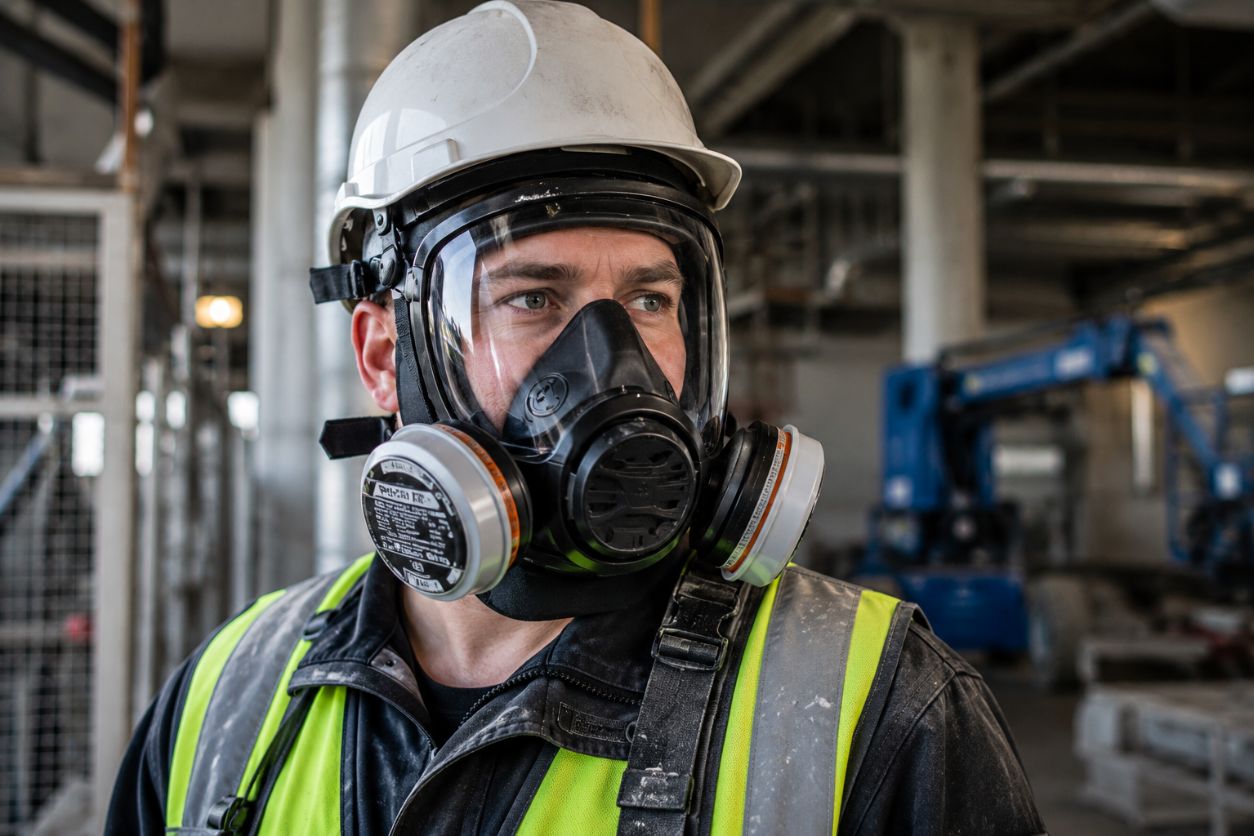

Workplace airborne hazards present immediate risks in construction and manufacturing facilities, where prolonged exposure to silica dust and chemical vapours permanently damages respiratory health. Deploying a certified Powered Air-Purifying Respirator (PAPR) protects workers and ensures strict UK regulatory compliance. Relying on inadequate paper masks leaves organisations vulnerable to legal penalties and severe health claims, making certified technical equipment essential. Protective Masks Direct has supported commercial organisations through major respiratory health crises over the last two decades, supplying critical guidance during SARS and COVID-19. The company supplies standard masks, replacement filters, and face fit testing kits to help operations teams standardise site safety rapidly.
What makes motorised filtration essential for high-risk work?
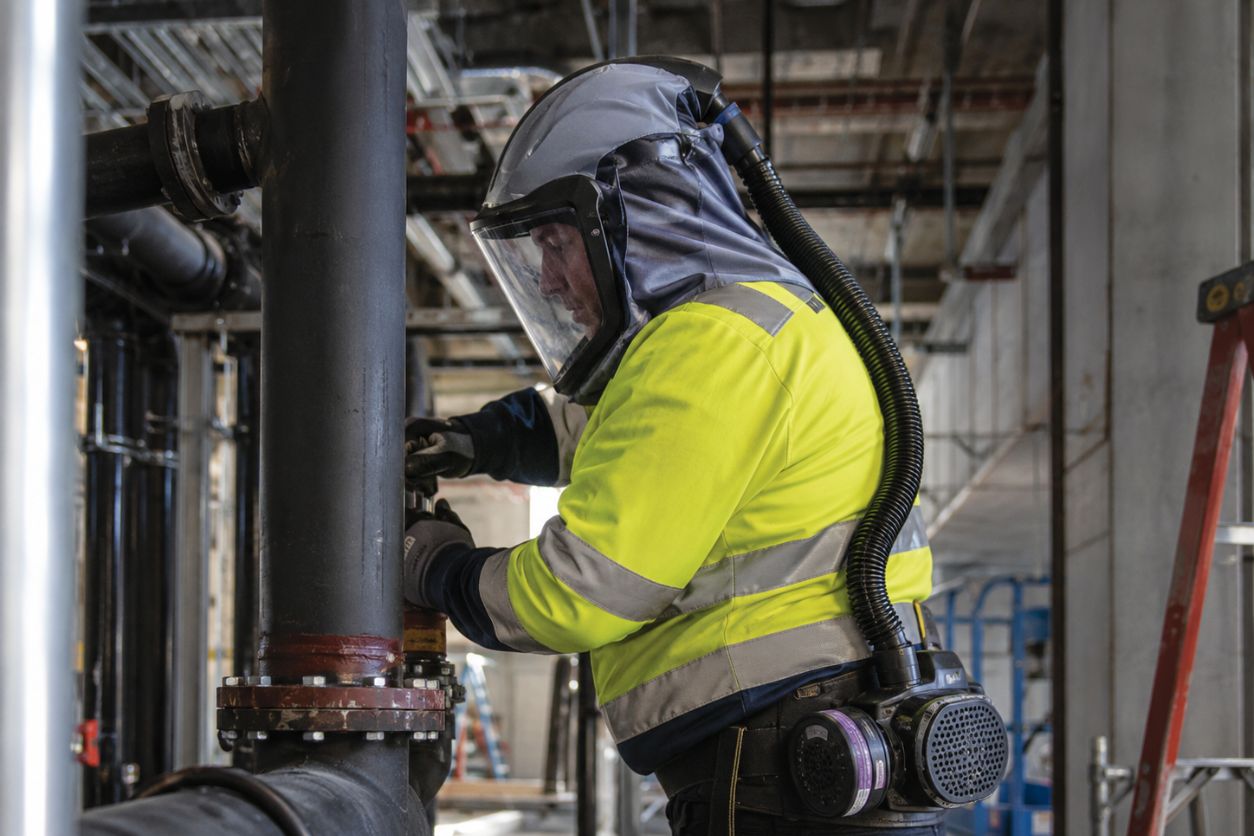
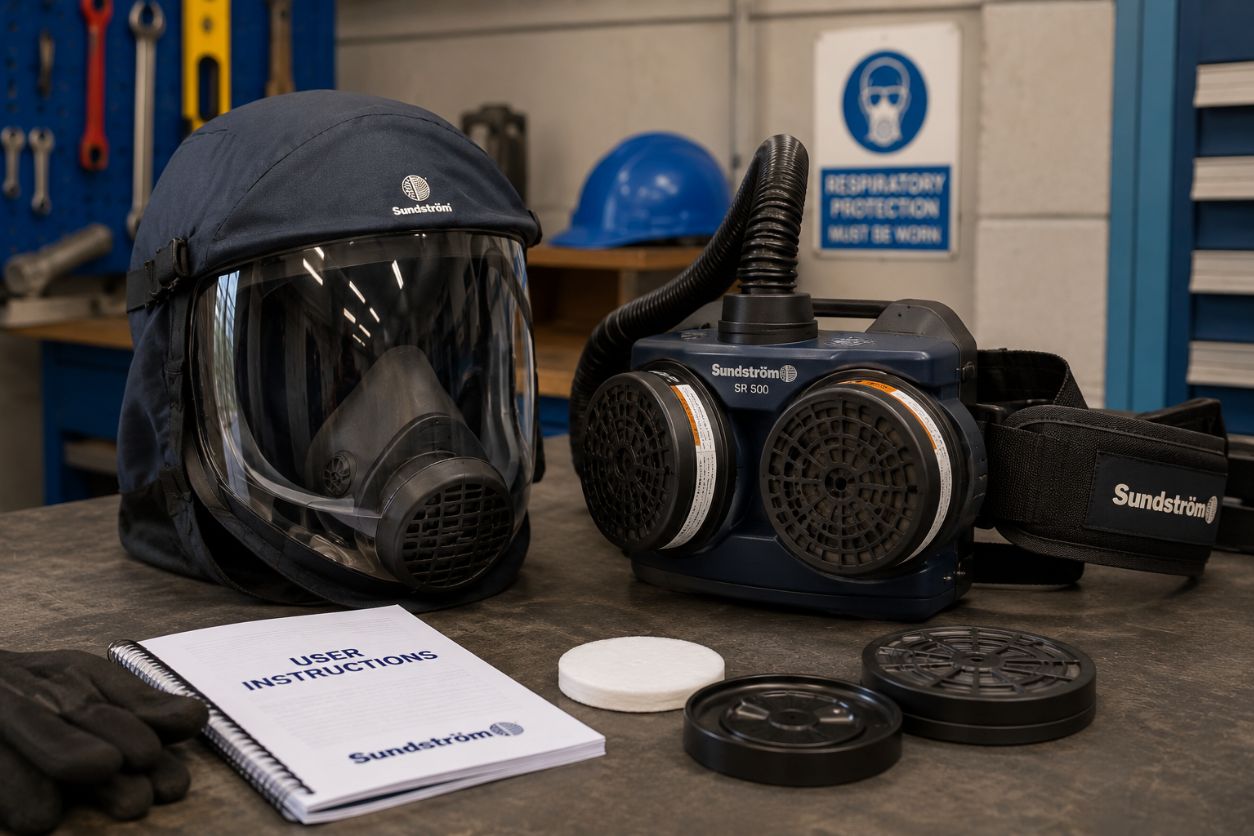
A motorised respiratory system delivers forced, filtered air directly to the user through a compact blower unit, creating a positive pressure environment inside the headpiece. This continuous mechanical airflow stops hazardous particles and toxic gases from breaching the seal, guaranteeing workers receive constant clean air regardless of severe contamination.
Protection levels depend on specific EN12941 certifications and assigned protection factors. High-risk environments demand continuous particulate filtration, and the motorised system forces air through high-efficiency filters before it reaches the breathing zone. This mechanical delivery completely removes the breathing resistance found in standard unpowered masks. Key regulatory standards dictate EN12941 compliance specifications and assign protection factor requirements for toxic environments.
Operations teams must match safety equipment to specific operational hazards accurately. Relying on basic FFP1 or FFP2 disposable masks in heavily contaminated zones is unsafe, as mechanical airflow units provide a quantified safety margin that manual alternatives cannot match. Routine audits require clear proof of adequate respiratory defence, and providing certified protection schemes demonstrates a baseline commitment to occupational health.
How do positive pressure systems improve daily worker comfort?
Positive pressure systems improve comfort by using a blower unit to supply a steady cooling breeze directly across the user's face. This constant airflow eliminates the heat and moisture buildup typical of heavily sealed disposable masks, preventing visor fogging and allowing operators to maintain normal breathing rates during strenuous physical shifts.
Physical fatigue often compromises workplace safety compliance. Unpowered FFP3 masks require significant lung power to pull air through dense filter media, which elevates heart rates and accelerates physical exhaustion. Motorised systems offload this respiratory burden entirely to prevent mid-shift exhaustion. Standard tight-fitting masks trap exhaled carbon dioxide near the mouth and nose, causing mild cognitive impairment during complex tasks.
Fresh airflow sweeps exhaled breath out of the headtop instantly, keeping operators alert and focused on their immediate surroundings. Comfortable, ventilated gear ensures personnel remain fully protected for the duration of their shift without prematurely removing their hot equipment. Protective Masks Direct focuses on gear that workers actually want to wear, because comfort directly drives workplace safety compliance.
Which specific environments require advanced respiratory protection?
Advanced respiratory protection is mandatory in heavy industry and healthcare settings containing concentrated airborne threats. Specifically, environments involving heavy metalworking fumes and active asbestos fibre removal require maximum filtration capabilities. These severe operational hazards demand absolute containment and constant mechanical ventilation to safely protect onsite fabrication and demolition personnel.
Selecting appropriate equipment requires assessing the exact chemical and particulate risks present onsite. Health and safety managers must match filter specifications to precise airborne threats because standard dust masks offer insufficient defence against concentrated volatile organic compounds. Agricultural workers encounter high volumes of organic dust and powerful chemical pesticides regularly. Enclosed spaces like agricultural silos present restrictive respiratory risks requiring immediate mechanical ventilation solutions that guarantee constant oxygen flow without manual effort.
How does the Pureflo Xtsream PAPR meet critical safety standards?
The Pureflo Xtsream PAPR meets critical safety standards by integrating head, face, and respiratory protection into one fully certified unit. This unified design guarantees seamless EN standard compliance across multiple hazardous categories simultaneously, entirely eliminating the need for separate, potentially incompatible safety visors and disposable respiratory masks.
Procurement teams require equipment that simplifies safety enforcement immediately. The Pureflo Xtsream delivers an impressive assigned protection factor of 40, easily exceeding standard requirements for most heavy industrial applications. The unit features quick-change filters for demanding shift patterns, which reduces downtime and simplifies onsite inventory management. Maintenance requirements remain entirely straightforward, as the smooth exterior surfaces allow rapid decontamination after exposure to heavy industrial splatter or dangerous particulates.
Standardising on a single comprehensive unit lowers long-term operational costs and reduces ongoing training requirements for temporary contractors. Protective Masks Direct supplies these advanced systems directly to major UK industrial contractors. Providing a single user-friendly unit ensures safety standards remain heavily consistent across changing workforce populations.
What makes the PF 3000 hard hat PAPR suited for industrial settings?
The PF 3000 hard hat PAPR is highly suited for industrial settings because it efficiently combines robust impact protection with continuous filtered airflow. The integrated helmet design actively shields workers from falling debris while filtering dangerous fumes, making it ideal for heavy construction and active demolition sites.
Balancing head protection and respiratory safety presents a historical challenge for safety officers. Standard hard hats often interfere with the straps of traditional respirator facepieces, but the PF 3000 system solves this interference by merging both safety functions into a single certified unit. Traditional combinations of separate safety glasses, hard hats, and face masks create overwhelmingly heavy headwear.
The PF 3000 distributes its weight evenly across the crown of the head to prevent neck strain when operators look up at elevated construction scaffolding. The rugged casing withstands daily impacts in harsh construction environments without compromising standard hard hat certifications. This extreme durability guarantees the system provides constant clean air without structural failure.
How do bulk purchasing and professional testing ensure site compliance?
Bulk purchasing ensures cost-effective procurement so every worker receives premium respiratory protection, regardless of facility size. Pairing this equipment with professional face fit testing guarantees each mask seals correctly against unique facial structures, ensuring strict legal compliance and maximum filtration efficiency across the entire industrial workforce.
Safety compliance extends far beyond initial product procurement. The law requires professional face fit testing for all tight-fitting respiratory equipment to verify sufficient operational defence. Protective Masks Direct delivers comprehensive testing services alongside Train-the-Trainer sessions, empowering health and safety managers to maintain internal compliance standards independently.
A Powered Air-Purifying Respirator bypasses many fit testing challenges entirely, as positive pressure headtops easily accommodate facial hair and different face shapes. Securing bulk deal savings allows procurement teams to stretch safety budgets significantly when outfitting hundreds of temporary contractors. Partnering with an experienced supplier guarantees consistent stock availability and highly predictable pricing for long-term project planning.
How do different professions benefit from advanced airflow systems?
Different professions benefit from advanced airflow systems by addressing their distinct airborne hazards with tailored technical specifications. Industrial trades receive robust impact resistance alongside high-efficiency particulate filtration, while healthcare professionals gain lightweight systems designed strictly for microbiological containment during long clinical rotations on infectious disease wards.
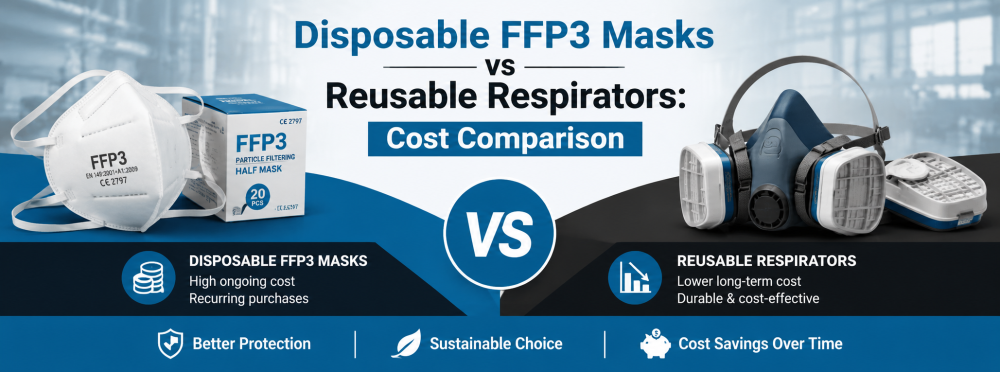
Evaluating these unique risks ensures optimal protection and specific budget efficiency. Health and safety managers value equipment that guarantees absolute regulatory compliance, while procurement teams focus heavily on tracking total lifecycle costs. Bulk purchasing replaceable filters and durable blower units proves more economical than constantly restocking premium disposable masks in the long run.
Motorised units remove the inherent uncertainty of poor mask seals on bearded or exhausted workers. Providing top-tier mechanised ventilation ensures workers can focus entirely on their trade without battling respiratory fatigue. High-performance systems deliver the necessary quantified safety margins for lethal environments securely and reliably.
Frequently asked questions about powered respiratory equipment
When evaluating powered respiratory equipment, safety managers frequently ask about operational battery life and strict legal testing requirements. Understanding these particular technical specifications ensures your workforce maintains continuous protection and your facility remains fully compliant with standard occupational health and safety regulations at all times.
How long does the battery last during a full industrial shift?
Most commercial motorised units provide continuous filtered airflow for eight to twelve hours on a single reliable charge. High-capacity batteries ensure personnel remain fully protected throughout extended overtime periods, while daily charging protocols eliminate unexpected power failures during critical hazardous material handling operations.
Managers must establish strict charging schedules to maintain continuous operational readiness at all times. Keeping spare battery packs on site prevents costly work stoppages in multi-shift manufacturing facilities. A consistent power supply guarantees the positive pressure barrier remains completely intact during maximum exposure events.
What maintenance routines keep your equipment certified?
Regular inspection of filters, breathing tubes, and headpiece visors serves as a strict legal requirement to maintain certification. Workers must log daily functional checks before entering any designated hazardous containment zone, and replacing clogged filters promptly guarantees the blower motor operates at maximum filtration efficiency.
Proper cleaning extends the lifespan of expensive respiratory investments significantly. Using approved sanitisation wipes prevents the rapid degradation of delicate rubber seals and plastic casing components. Storing units in dry and secure environments prevents accidental cross-contamination between active industrial shifts.
When do you need professional fit testing services?
Any worker using a tight-fitting mask must pass a professional fit test by law to ensure adequate protection. You must schedule new verification tests whenever an employee gains significant weight or undergoes major dental surgery that substantially alters their structural face shape.
Protective Masks Direct provides essential face fit testing kits and professional UK-wide testing services. Transitioning to a Powered Air-Purifying Respirator with a loose-fitting hood eliminates this specific legal testing requirement entirely. This mechanical advantage saves significant administrative time and reduces ongoing occupational medical testing costs. Contact us to upgrade your safety protocols with certified equipment protects both your workforce and your operational continuity.