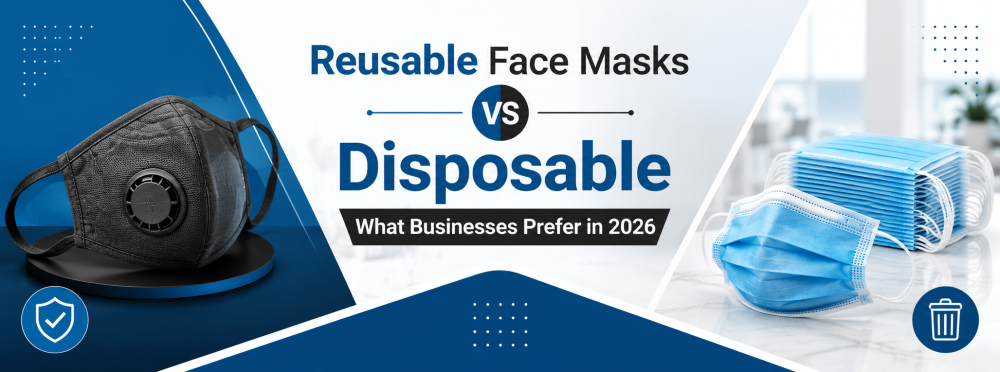
Ensuring the safety of your employees is a priority for most businesses in 2026. A protective face mask acts as a shield for the staff, protecting them from harmful germs, chemicals, dust, airborne particles, etc at the workplace. Most employees commonly use reusable masks and disposable face masks to protect themselves from pollution, germs, airborne viruses and particles, dust, etc. While disposable face masks are budget-friendly, offer convenience, and high-level protection, the reusable masks are good for long-term use but require careful handling.
So, to help you make the right choice without compromising on safety and long-term value, let’s understand in detail about the reusable and disposable masks to identify which option aligns best with your business needs.
An Overview of Disposable and Reusable Face Masks
Both reusable face masks and disposable masks create a barrier against respiratory droplets that can cause the spread of infection.
Disposable Masks
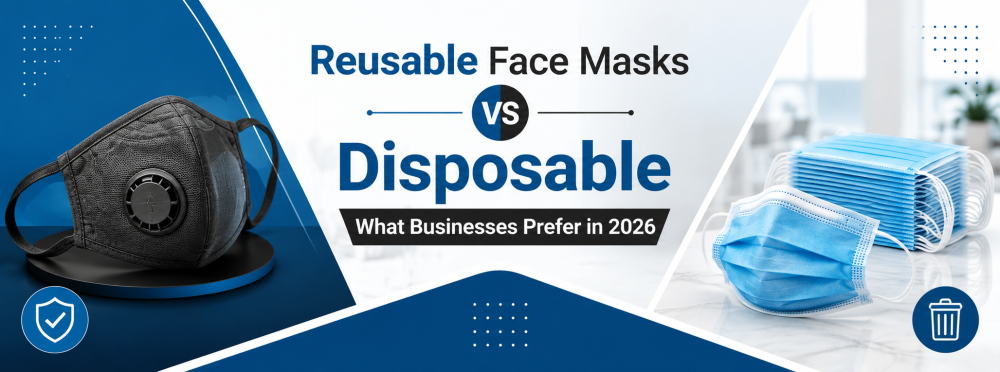
Manufacturers make most disposable face masks from materials that do not have any woven structure; therefore, they design them to be disposed of after one use. Both members of the general public and healthcare facilities use them in places where people must wear a mask for long periods of time. These masks are lightweight, comfortable to wear, and are also available with layers of protection.
Reusable Masks
On the contrary, manufacturers make reusable face masks from materials that people can wash and reuse multiple times. Most reusable masks contain multiple layers of material, which helps to improve filtering capability. Because of concerns over sustainability, they have gained popularity as a more sustainable option compared to disposable masks.
Reusable vs Disposable Masks: Understanding The Difference
| Factor | Disposable Masks | Reusable Masks |
|---|---|---|
| Cost Over Time | Higher due to continuous repurchasing | Lower long-term if reused properly |
| Initial Investment | Low upfront cost | Higher upfront |
| Protection Consistency | Consistent, single-use performance | Varies with cleaning and filter quality |
| Filtration Level | Moderate filters are used | High with certified types like an FFP3 mask |
| Convenience | Easy, ready-to-use | Needs tracking and maintenance |
| Hygiene Control | No maintenance; discard after use | Requires strict washing protocols |
| Environmental Impact | Higher waste, single-use disposal | Lower waste generation |
How Businesses Choose the Right Mask
When selecting a mask, there are no shortcuts anymore; it is crucial to consider the entire lifecycle of a protective face mask when evaluating its relative cost, compliance, comfort/safety and environmental impact during routine operations.
Cost Breakdown: Which Option Saves More?
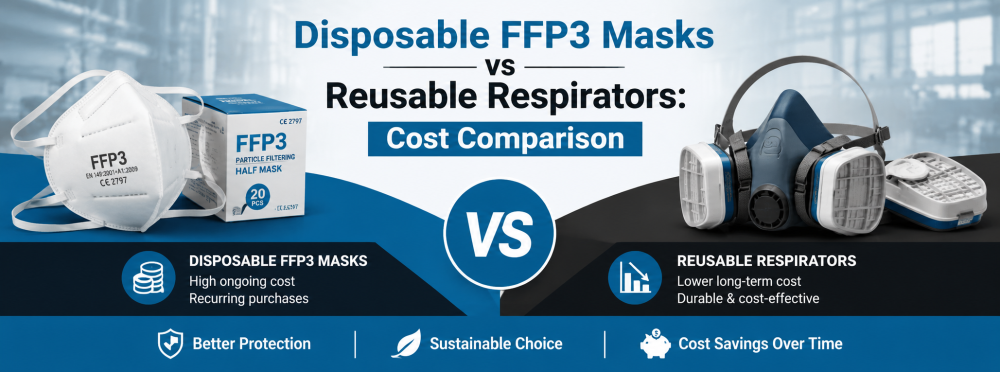
Disposable face masks are typically less expensive because they come in bulk. However, you will be purchasing repeatedly, and if this is the case, your total costs can increase.
Conversely, reusable masks can be costly initially, but when it comes down to frequently using them, they may actually be less expensive. Long periods of using disposable masks may take a toll on the budget.
Safety Factor
The type of PPE (post-consumer waste; non-recyclable & recyclable), the method used, the fit, and the degree of compliance all determine if the mask (whether disposable or reusable) is safety compliant. PPE can meet safety requirements through adequate maintenance/replacement (according to its classification) to ensure product safety compliance.
Comfortable to Wear
Bulky or poorly ventilated masks reduce wear time and appropriate use. Comfort is the immediate factor influencing sound protection in practice, so firms increasingly prioritise airy and snug designs.
Reusable Masks - Sustainable Solutions to PPE Waste
During peak consumption periods, people used an estimated 129 billion disposable masks every month. Most people disposed of the vast majority or sent them to landfills, contributing to the cyclical waste of single-use masks and the supply pressures they created.
Utilising PPE in a reusable manner is a viable option for companies operating for the long haul, as it reduces landfill wastage, aligns with ESG goals, while improving brand reputation.
When Should Businesses Choose Reusable Masks?
Certified disposable masks typically offer a constant degree of filtration. However, if they fit well, premium reusable masks with several layers of fabric can also provide significant protection. Disposable masks are a preferable option in high-risk, dusty, or contamination-prone settings, or where hygiene control is more difficult to monitor, such as:
- Construction sites
- Jobs near healthcare facilities
- Visitors and temporary employees
Reusable masks are most effective in stable, low-to-moderate risk environments where workers must wear protection for extended periods of time, such as:
- Offices
- Retail floors
- Warehouses
A well-fitting reusable face mask with several layers can filter out a sizable portion of respiratory droplets, making it a powerful alternative to disposable masks.
Future Trends – What Will Businesses Prefer After 2026?
Future trends in protective face masks reflect a combination of both reusable face masks and disposable mask options, whose usage depends on maintaining an acceptable balance between daily use, comfort and protection.
Some of the future trends that businesses might observe in 2026 include:
- Smart masks that have filtration indicators.
- Usage of nanofibre-based filtration techniques in masks that are effective in capturing ultra-fine particles while allowing the natural flow of air to the user.
- The standard today is low resistance to breathing (to assist users in staying comfortable), resulting in better airflow, allowing for increased compliance from the wearer (when performing jobs that require constant activity, talking and/or extended use of the protective device).
- Replaceable filters exhibit consistent performance, which reduces waste and encourages long-term savings and better inventory management.
- Masks made from biodegradable materials.
- Designs that are neutral in appearance, that blend in with normal work activities. Introduction of fits that are adjustable and pressure-free will reduce the need to make modifications during shifts.
The Bottom Line
Choosing between reusable and disposable masks will depend on your business values, work practices, and individual preferences. It is essential that you carefully consider your choices because both have their unique advantages and disadvantages.
Regardless of whether you choose a disposable mask for quick use or a customised reusable mask, you will be making an important choice for yourself and others. A properly fit mask can help give you peace of mind while managing the day-to-day challenges you face.
FAQs
Are reusable masks better for businesses?
Reusable masks cut long-term costs and waste, but only if cleaned properly. Without strict hygiene, their protection drops. In such cases, disposables offer more consistent safety.
Are reusable masks as safe as FFP3?
Usually not. Reusable masks often fall below 99% filtration, while FFP3 masks provide up to 99% with a tight seal.
When to choose disposable vs reusable?
Use disposables in high-risk, dusty, or short-term work settings. They’re also ideal for visitors or temporary staff. Reusable face masks suit controlled environments with proper cleaning systems.
How to ensure mask safety standards?
Look for certifications like NIOSH or CE. Verify test reports and ensure compliance with standards like EN 149.
What should businesses consider?
Consider factors such as risk exposure, workforce size, hygiene control, and storage. Disposables work best in high-risk zones; reusables fit stable, regulated setups.