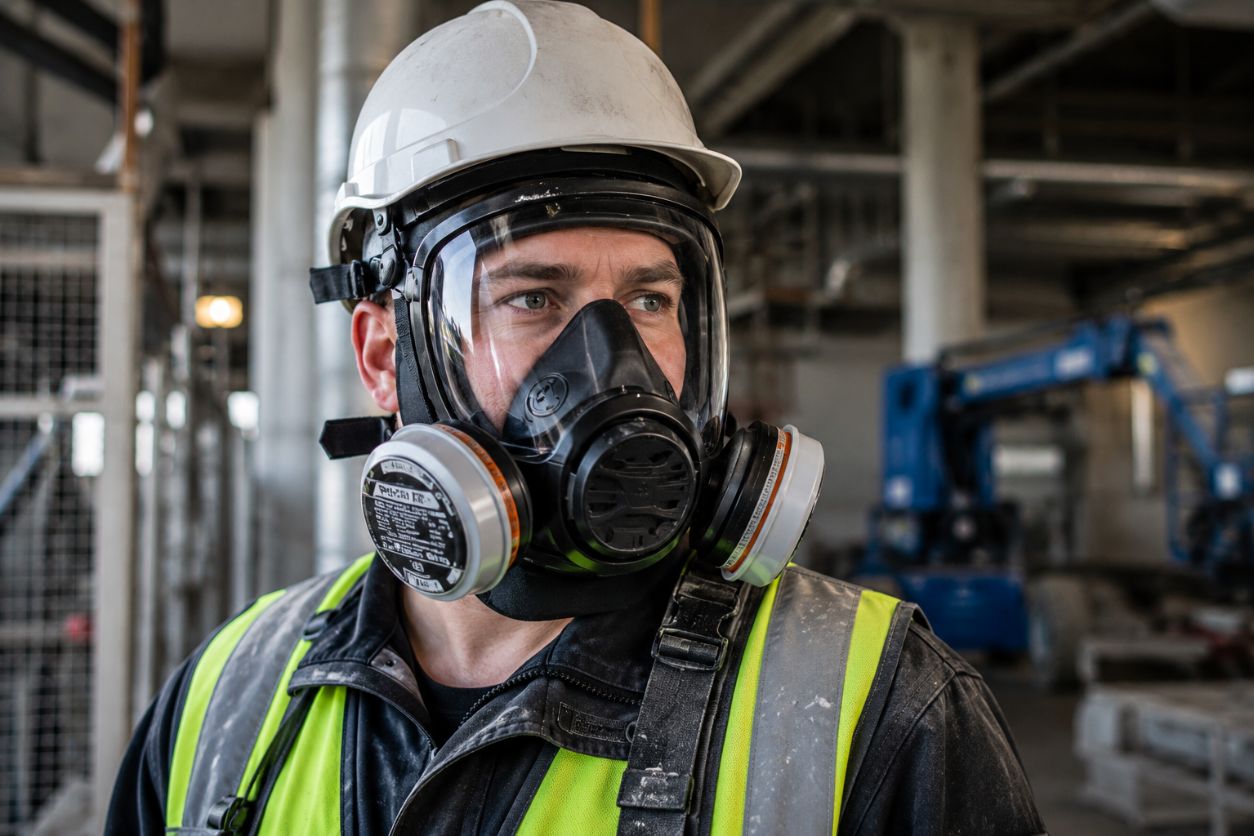

More places of work contain hazards affecting your respiratory system than you might expect. Staff can still work close to airborne material for a long time despite implementing cleaning routines.
With different masks each having their own strengths and limitations, for various sorts of work, your teams can be given the appropriate safeguarding measures once you understand the main types.
What is a PPE Mask?
PPE masks are respiratory protective devices designed to filter contaminated air before it reaches the wearer. They range from basic disposable options to advanced powered units. Their purpose stays the same across all models, to keep harmful material out of the air workers breathe during routine tasks or higher risk work.
What do Workplace Respiratory Masks do?
Some masks rely entirely on the wearer's lungs to pull air through the filter. Others use a powered unit to move air towards the face. Some protect only the nose and mouth, while others also shield the eyes. Your selection needs to reflect the task and how long the mask needs to stay on in real work.
1. FFP1 Disposable Dust Mask
FFP1 dust masks sit at the lower end of the filtering scale and usually suit light tasks where dust levels remain modest. Many are cup shaped with adjustable nose bridges and elastic straps.
They provide protection in jobs like sanding and occasional drilling, but it is basic. This makes them unsuitable when working amidst high levels of dust and other hazardous materials.
When you review light tasks, an FFP1 option sometimes works as the first step before you consider a higher grade PPE face mask or more demanding work.
2. FFP2 Respirator Mask
FFP2 masks offer a higher filtration level than FFP1 and are often used where dust levels are moderate. They can handle many workshop tasks where cutting, grinding or sanding occur more frequently. Some models include exhalation valves that help reduce heat build-up inside the mask.
For staff who move between several light and medium tasks in a shift, FFP2 PPE masks often strike a workable balance between comfort and protection. They still suit disposable use, yet they stand up better in busier workshops where lower grade masks would quickly reach the end of their useful life.
3. FFP3 High Filtration Mask
FFP3 masks sit at the top of the disposable filtering scale. These masks are used where hazards present a higher risk to health or where exposure levels are more intense. Examples include extended cutting indoors, regular work with hardwood dust and tasks that generate fine, lingering airborne material.
FFP3 PPE masks give you more protection than FFP1 and FFP2, but that is if it’s sized correctly and the face seal is flush. Before your employees enter a hazardous area, they must understand how to check for gaps.
4. Reusable Half Mask
Reusable half masks rely on a main mask body made from flexible material, with replaceable filter cartridges on the sides. Sealing around the nose, cheeks and chin, your eyes are left uncovered. To cope with different hazards like dusts or organic vapours, cartridges should be swapped.
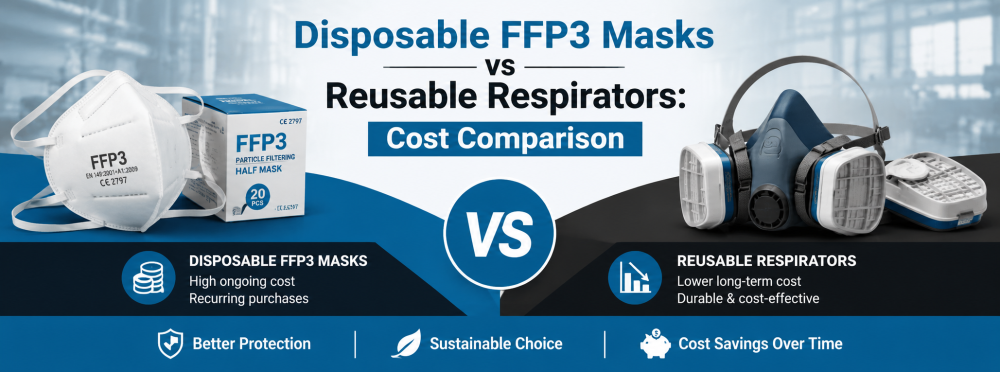
Suited for workshops and maintenance roles, these PPE masks can feel more reliable than disposable masks during long tasks. They are also more economical once you account for frequent mask changes. You need a clear filter replacement plan so that staff do not continue using cartridges that are past their service life.
5. Full Face Respirator Mask
Full face respirators extend protection to the eyes as well as the nose and mouth. A clear visor sits in front of the face, and the mask body seals around the perimeter. This style helps protect against splashes, rising fumes and dusts that irritate the eyes.
Eye and respiratory protection should be combined in paint shops and chemical handling areas. That is where a full face protection mask comes in. They might be a little heavier than half masks, but they are much easier to wear as you don’t need separate goggles.
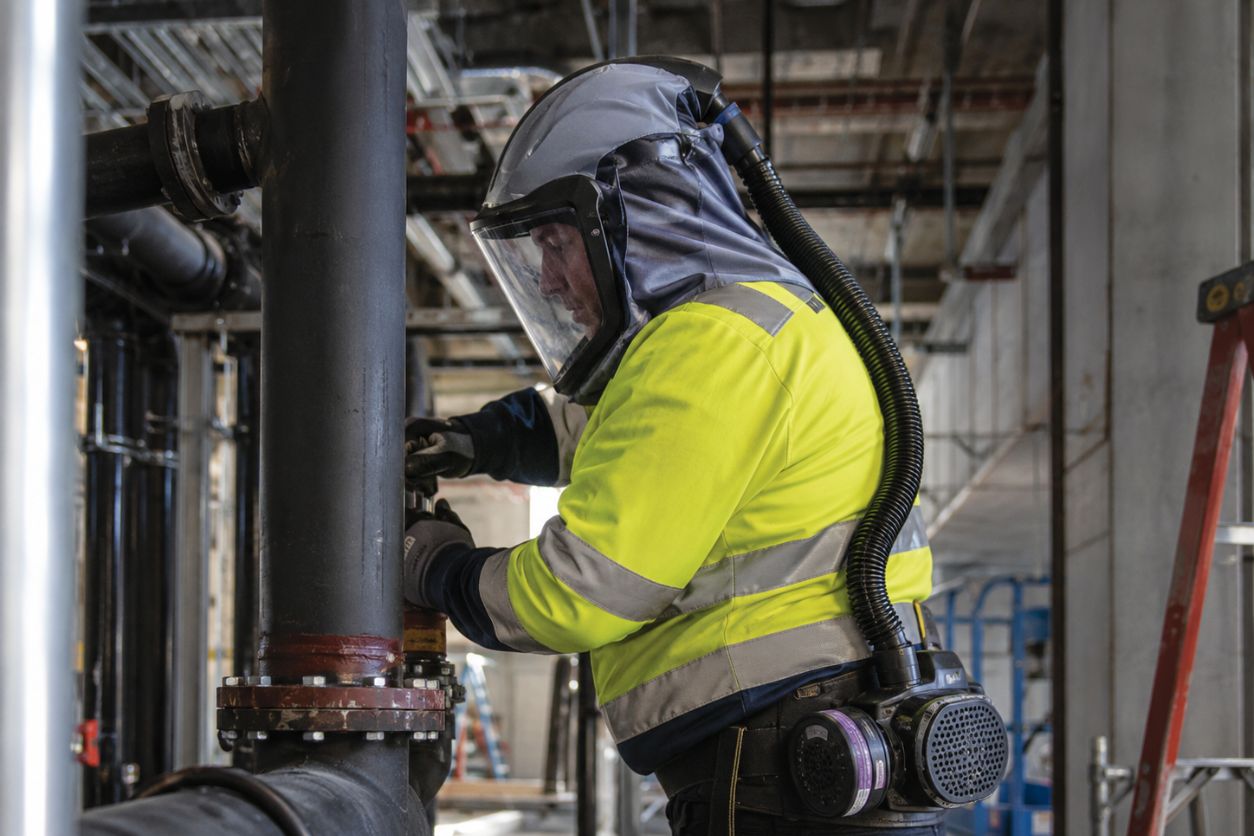
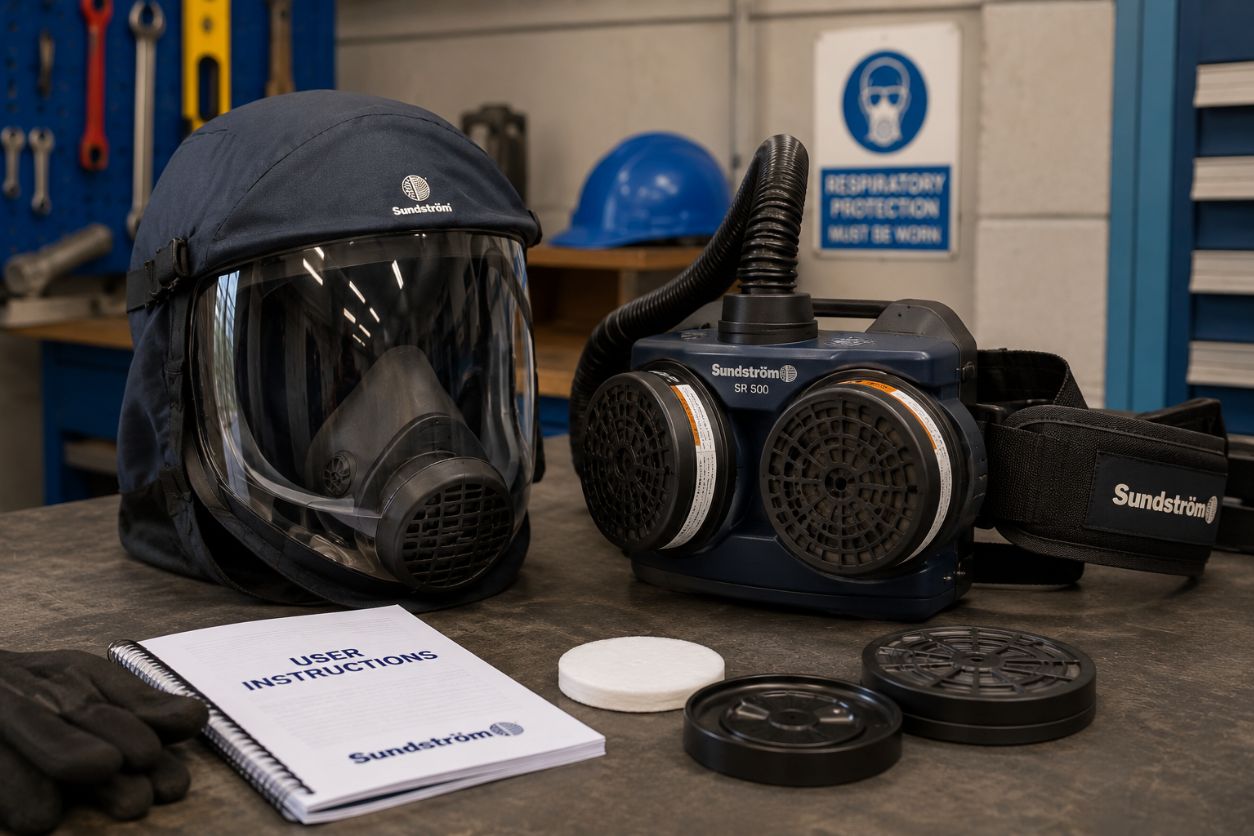
6. Powered Air Respirator
These respirators use a battery-powered unit with filters and a hose that sends clean air into the hood or headpiece. It makes breathing feel easier during harder work. The headpiece often provides eye and face protection as well.
Powered systems can be a great way to protect you when large amounts of dust is generated. In these environments, a PPE face mask with assisted airflow can maintain protection for longer durations. Workers don’t have to struggle to breathe like they would in a tight disposable masks. It also means they don’t need to keep swapping their mask out for a new one.
Want to compare powered and non-powered options for your site? Contact us.
How do You Decide Between Disposable and Reusable Masks?
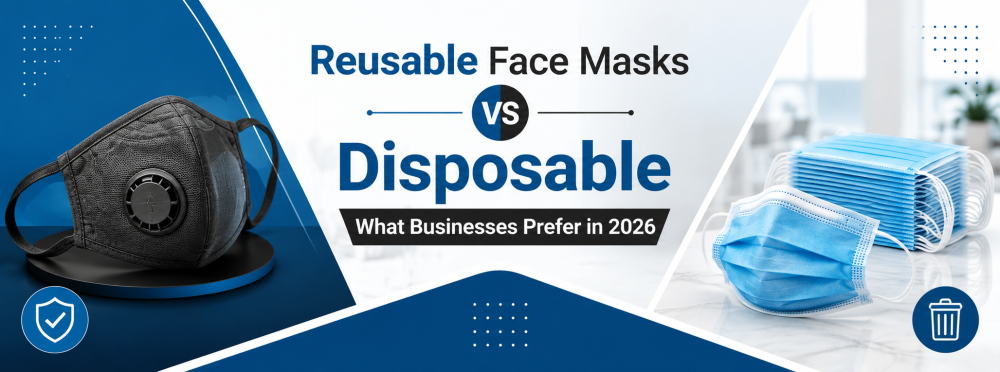
As soon as the different mask types are understood, you then need to decide whether to use a disposable or reusable mask. Disposable masks can be used when a job begins before being discarded when it’s over.
You will be better placed in recurring, or longer-duration tasks if you opt for a reusable or powered full face protection mask. As mask use increases through a week, the number of disposable units needed soon rises. At that point, a reusable system with planned filter changes may bring more predictable performance and clearer cost planning.
How to Choose Mask Ratings For Each Job
Mask ratings need to line up with the hazard created by each job. That assessment should consider how much dust or fume appears, how far it spreads and how long workers remain in that area. You do not need the highest rating for every single task, yet you also cannot rely on low-grade masks in high risk locations.
Many sites group tasks into bands as this kind of structure helps supervisors make quick, consistent choices. This is also where higher rated PPE masks or a suitable PPE face mask can be assigned to heavier work.
How Often Should You Replace Workplace Masks?
Mask replacement depends on type, usage and manufacturer guidance. Disposable masks are designed for limited life. As soon as they look dirty, the straps become broken, or it becomes more difficult to breathe, they should no longer be used. Do not clean or wash disposable masks so you can reuse them.
Reusable PPE masks need more structured care. Mask bodies require cleaning after use, and filters need replacing on a planned schedule. Many organisations have simple rules, such as replacing filters after a set number of hours in use or at the first sign of breathing resistance. Clear rules reduce the chance that busy staff carry on with worn-out components.
Get Help With Mask Selection
When deciding between different options, it can help if your workers are involved in any trial runs. This way you get direct feedback from the people who will be using the masks most frequently.
We work with a wide range of manufacturers and can help you compare PPE masks for sectors such as woodworking and construction, along with many other settings.
If you want to review your current approach to respiratory protection, contact us. We will help you choose a full face protection mask that fits your hazards, work patterns and comfort needs so your staff can work safely.