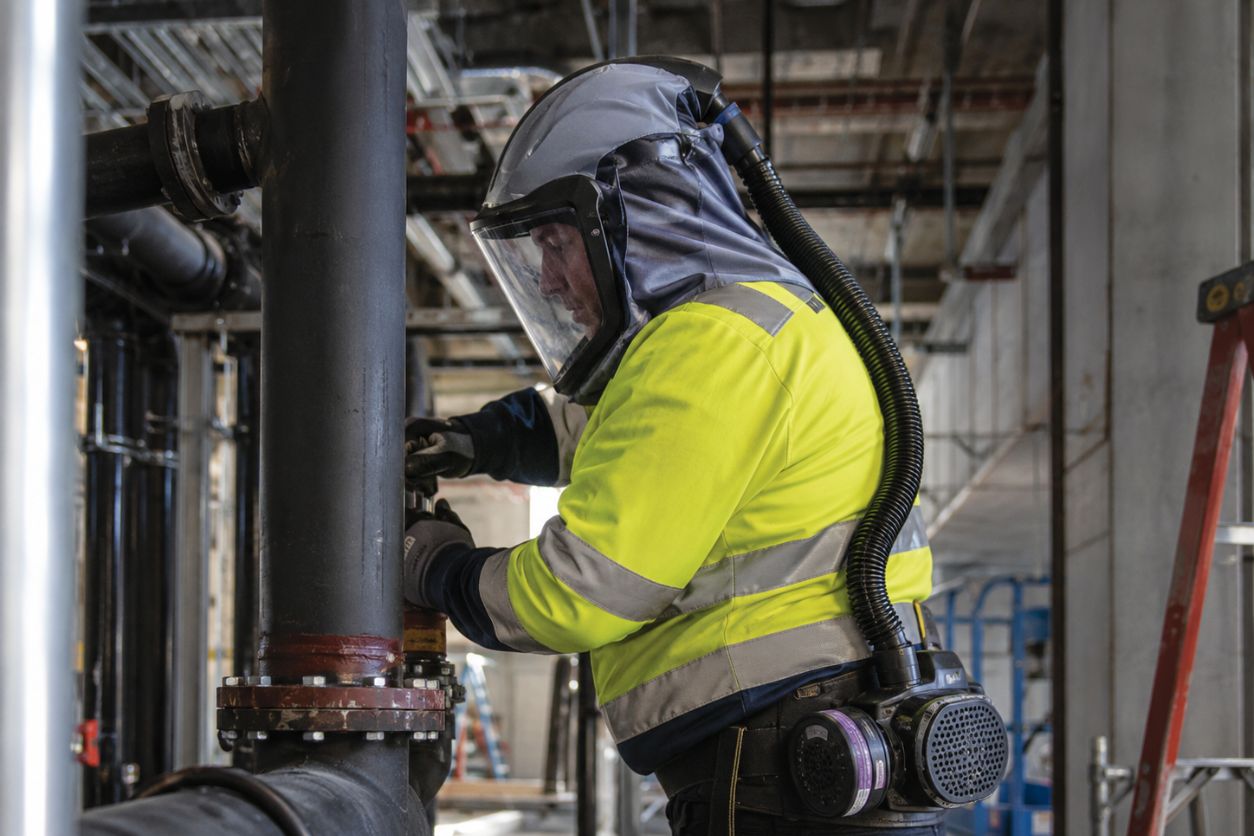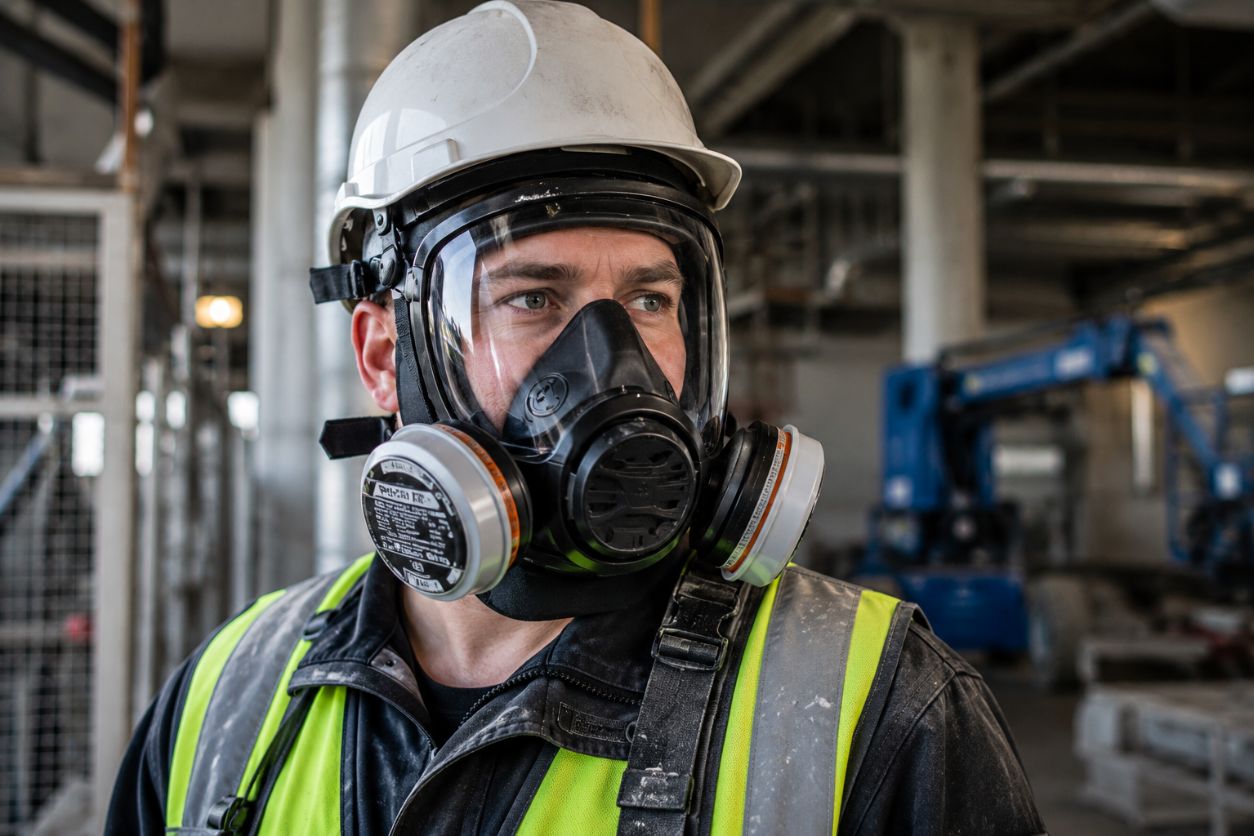

Poorly ventilated rooms or confined spaces have little to no space for the air to escape. In such areas, if construction, manufacturing, cleaning, or repair work is performed, the airborne particles, dust, hazardous chemicals, or other contaminants can quickly build up in that atmosphere and increase the risk of inhalation.
Therefore, people working in such spaces need to protect themselves from inhaling such hazardous fumes or airborne particles by wearing protective masks. A standard dust mask simply isn't built to handle them. But an FFP3 face mask can reduce airborne exposure by a factor of 20 and deliver the highest level of disposable respiratory protection. That means you can remain safe from dangerous airborne particles even while working in a sealed loft conversion, underground utility space, or a windowless industrial unit.
However, not all FFP3 dust masks and half-face masks are equally built for low-ventilation conditions. So, which one actually performs when the air isn't moving? Let’s find out.
Why Low-Ventilation Areas Increase Airborne Risks
Respiratory risks don't disappear just because you can't see them. In restricted spaces, fine particles, fumes, and biological hazards linger in the breathing zone far longer than they would outdoors. Here’s what you need to know about airborne risks to choose the right protection.
What Happens to Airborne Particles in Enclosed Spaces?
In open environments, airborne particles disperse quickly. While in confined indoor spaces, without natural or mechanical ventilation, these particles accumulate and are suspended in the air for a long time. Silica dust from drilling and other particles like asbestos fibres, mould spores, and metal fumes simply accumulate in the enclosed space quickly. That means these harmful concentrations build with every task performed.
Common Low-Ventilation Work Environments
Industries that regularly expose workers to poor ventilation conditions include:
- Loft conversions and roof space work.
- Basement and underground civil engineering.
- Old building refurbishment and demolition.
- Confined utility and maintenance spaces.
- Industrial manufacturing units with limited air exchange.
- Healthcare isolation rooms and decontamination zones.
Working in such settings requires workers to wear specialised protective respiratory masks instead of standard disposable masks.
Why Basic Dust Masks Often Struggle Indoors
Standard FFP1 or FFP2 masks filter 80–94% of particles. But it is not fit for a workspace with continuous exposure to concentrated hazards. A leaking face seal, a lower filtration grade, or the absence of a test rating can all allow dangerous particles to enter the lungs. That gap enhances the health hazards when there is no ventilation.
What Is an FFP3 Face Mask?
The FFP3 face mask is the highest-rated disposable respirator available under the EN149:2001+A1:2009 standard in the UK. It filters at least 99% of airborne particles, with an Assigned Protection Factor (APF) of 20. It means it reduces your exposure to hazardous material to a twentieth of ambient levels. It is the best option for employees in low-ventilation work.
How FFP3 Masks Reduce Airborne Exposure
A well-fitted FFP3 mask has a highly efficient filter medium with a close-fitting face seal. The seal prevents unfiltered air from bypassing the filter around the edges. It is important in poorly ventilated spaces where even low concentrations of fine particles pose serious long-term health risks. All tight-fitting respirators must be face-fit tested, as required under HSE COSHH guidelines.
FFP3 vs Standard Dust Masks
Let’s understand the difference in the performance, protection, usage and fit of an FFP3 mask and a standard dust mask in low-ventilated areas closely:
| Feature | Standard Dust Mask | FFP3 Masks |
|---|---|---|
| Filter efficiency | Basic filtration ideal for low-risk dust exposure | Filters 99% of the airborne particles, even in confined spaces |
| Protection | Minimum protection against hazardous particles and contaminants | Strong protection in high-risk areas and confined zones that might offer exposure to silica, asbestos, moulds, and metallic particles |
| Ideal work environments | Light cleaning and low-exposure tasks | Construction sites, industrial facilities, or hazardous work areas |
| Seal and fit | Loosely fitted and have a high risk of air leakage | Offer a tighter facial seal for enhanced respiratory protection |
Which FFP3 Face Masks Work Best in Poorly Ventilated Areas?
The right mask for low-ventilation work depends on the hazard, the duration, and the fit. Here are some of the best options:
Mask Pro3 L FFP3 Masks
Ergonomically shaped for extended wear, the Mask Pro3 L is a valved FFP3 face mask individually wrapped with an exhalation valve. It can protect against harmful materials in concentrations up to 50xOEL.
Mask Pro3 FFP3 Masks (Pack of 10)
A slightly more compact fit than the Pro3 L, the Mask Pro3 delivers the same valved FFP3 dust mask performance with a face-close seal. It is for workers with a medium-to-small face profile who need high-grade protection in low-ventilation conditions.
3M 9332+ P3 Foldable Valved Respirator Mask (Box of 10)
The 3M 9332+ is a fold-flat P3 mask with a foldable design for easy storage. With an advanced three-panel design, it offers optimum comfort for the wearer working for long hours in low-ventilated spaces.
Sundstrom sr100
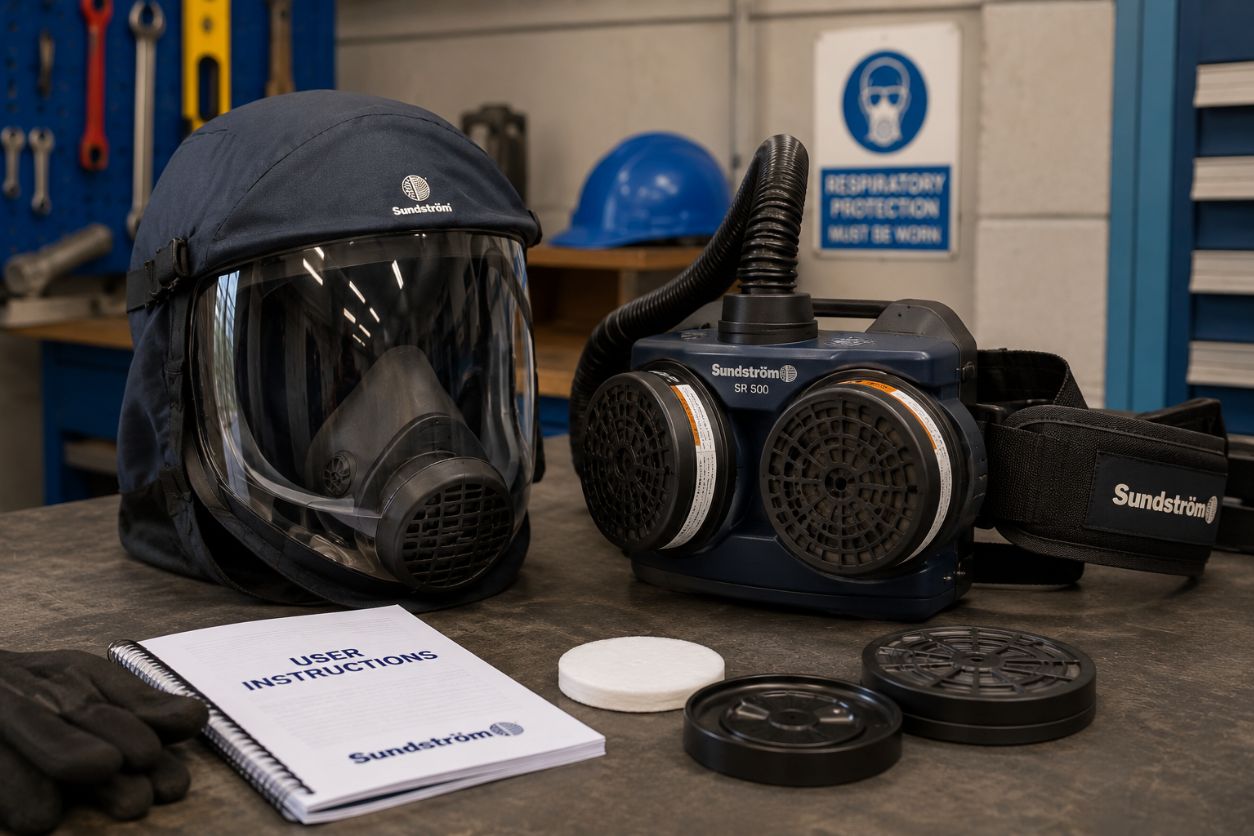
The Sundstrom SR 100 half mask is designed with two exhalation valves to ensure low exhalation resistance. The exhalation membrane offers protection against paint and mists, and the comfortable V-shaped loop offers a secure fit. It can be used with additional P3 filters for enhanced protection.
When Is a Half Face Mask Better Than a Disposable FFP3 Mask?
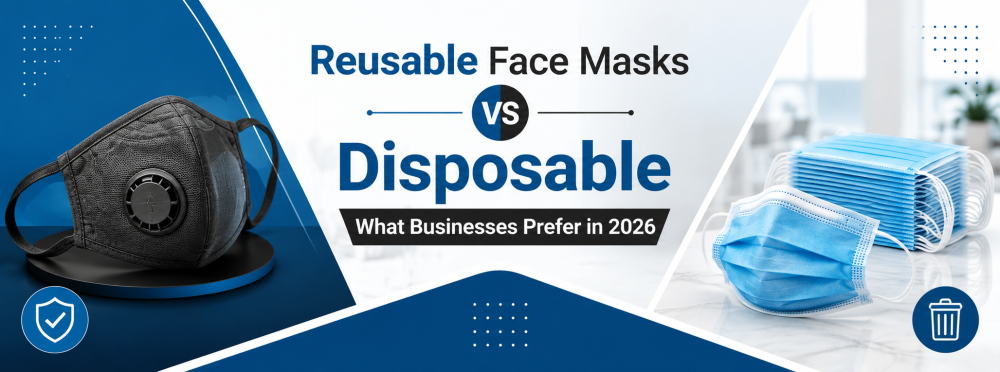
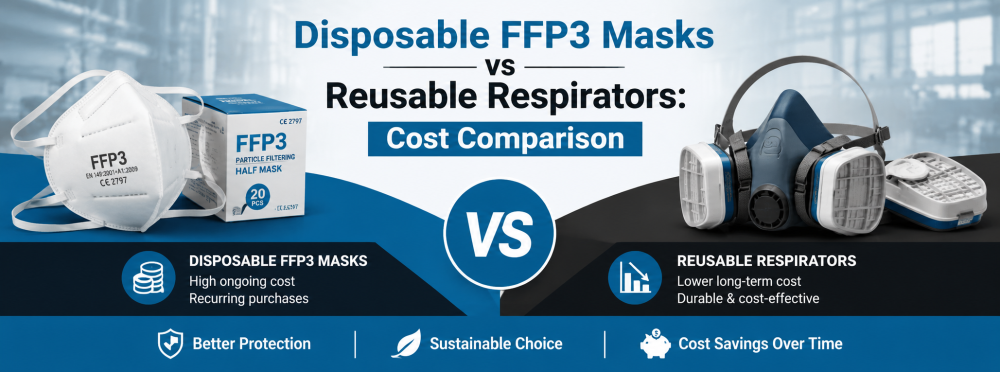
If you are spending more time in low-ventilation environments, a reusable half-face mask fitted with P3 filters is better than single-use disposables. The silicone body offers the best facial seal, and replaceable filters ensure better protection and cost-saving in the long term.
| Factor | Half Face Mask | Disposable FFP3 Mask |
|---|---|---|
| Reusability | Yes (need to replace filters) | No (Single-use) |
| Comfort (extended wear) | Best (silicone body) | Good for a short time |
| Face-fit flexibility | Multiple sizes available | One-size |
| Best for | Ongoing site/industrial work | Occasional or varied tasks |
Choosing the Right FFP3 Mask for Specific Hazards
Different hazards call for different masks. An FFP3 mask asbestos application requires a tight, CE-certified face seal above anything. Here’s a quick reference to match your hazard to the right product:
| Hazard Type | Recommended Mask |
|---|---|
| Asbestos (FFP3 mask asbestos) | Mask Pro3 L / JSP Force 8 Half Mask |
| Silica/construction dust | 3M 9332+ or Eagle P391 |
| Metal fumes & welding smoke | Sundstrom SR100 + P3 Filter |
| Mould & biological particles | P351 FFP3 Respirator / HY9330 |
| Fine industrial dust | Alpha S-3V (small face fit) |
How to Improve Respiratory Protection in Low-Ventilation Areas
Even the best FFP3 face mask performs better when you follow good working practices. The mask is only part of the solution.
Here are some other tips to ensure your protection in confined, low-airflow spaces:
- Always undergo a formal face-fit test before using a tight-fitting respirator.
- Inspect the mask before each use. Check the face seal, nose bridge, and valves.
- Replace valved FFP3 dust masks once breathing resistance increases noticeably.
- Use local exhaust ventilation (LEV) alongside your mask where possible.
- Store unused masks in sealed bags away from UV light, heat, and contamination.
- Never reuse a single-use FFP3 mask. Its filtration performance degrades after the first use.
Features to Look for in the Best FFP3 Face Masks
Not every mask on the shelf offers the same protection. When selecting an FFP3 mask for low-ventilation environments, look out for the features to invest in the right product:
- EN149:2001+A1:2009 certification: The UK standard for disposable respirators
- Dolomite tested: Confirms sustained filtration in dusty conditions.
- Adjustable nose bridge: For a close, leak-free seal.
- Exhalation valve: Reduces heat and moisture build-up during prolonged use.
- Individual packaging: Protects the mask from contamination before use.
- Size options: To ensure the face seal is as required by COSHH guidelines.
Common Mistakes That Reduce FFP3 Mask Performance
A high-grade mask only works when it's used correctly. Here are some mistakes that most FFP3 mask wearers make, compromising their protection:
- Skipping the face-fit test: Up to 50% of wearers get a poor seal without testing.
- Wearing over a beard: Facial hair breaks the seal entirely.
- Pulling the mask down between tasks: Increase exposure to contaminated air.
- Using an expired mask: Reduced filtration and seal performance.
- Choosing the wrong size: Too large and air leaks in; too small and discomfort leads to removal.
- Ignoring valve condition on reusable masks: Allows unfiltered air to pass through the mask.
Final Thoughts
Low-ventilation environments demand the highest level of respiratory protection. It means you need to invest in the right FFP3 face mask for the task. Choose a certified, fit-for-purpose mask for every low-ventilation space to protect your health in the long term. Browse Protective Masks Direct's full FFP3 range and find the protection that fits you perfectly.
FAQs
What is the best FFP3 face mask for low-ventilation areas?
The Mask Pro3 L and the Sundstrom SR100 half face mask are top choices. Both offer a secure face seal, exhalation valves for comfort, and full EN149:2001+A1:2009 certification.
Are half-face masks better than disposable FFP3 masks?
For extended or repeated indoor work, a half-face mask like the Sundstrom SR100 offers better seal and lower long-term cost. Disposable FFP3 dust masks are for shorter tasks or varied sites where carrying reusable equipment is not possible.
How long can you wear an FFP3 dust mask?
Disposable FFP3 masks are for single-use. It should be replaced once you notice an increase in breathing resistance or the mask becomes contaminated. Reusable half-face masks can be used for a longer period. Make sure to replace the filters as per the manufacturer's instructions and check the seal before each use.
Can FFP3 masks protect against asbestos?
Yes, workers can use FFP3 mask asbestos solutions when working in confined areas with high asbestos protection.
How long can you wear an FFP3 dust mask?
The usage time depends on the mask type, manufacturer guidelines, and exposure conditions. However, the disposable dust masks should be replaced immediately if they become damaged, difficult to breathe or contaminated.