
Safety managers often overlook risks in zones where the hazard isn't obvious. It’s a common mistake, but breathing in fine particulates for 40 hours a week leads to cumulative damage that stays hidden for years. Conditions like occupational asthma or COPD don't just happen in mines. They often happen in packing sheds and archives too. Selecting the right ppe masks isn’t a paperwork exercise but the only true way to protect your staff and your business from long-term health claims.
At Protective Masks Direct, we’ve spent 18 years supplying everyone from high-hazard asbestos teams to cleanroom technicians. A packing facility looks nothing like a demolition site, but the law doesn't distinguish between them when it comes to worker safety. If your risk assessment shows dust in the air, you need a solid plan to manage it, which often starts with issuing certified ppe masks.
What defines a low-risk work environment for respiratory safety?
In the safety world, a low-risk environment usually just means the air looks clear to the naked eye. On paper, these are areas where hazardous concentrations stay below the Workplace Exposure Limit (WEL). In reality, "low risk" is often a trap. You might not see smoke in an archive or a retail stockroom, but those spaces are frequently thick with paper fibres, mould spores, and fine dust.
The HSE focuses on long-term exposure. One hour in a dusty archive won't kill anyone, but doing a full shift there every day for five years creates a serious health debt. Constant exposure to "non-toxic" dust eventually wears down the body's ability to clear its own lungs. Because this damage builds up over time, providing high-quality ppe face mask for these routine shifts is a vital preventative measure.
You’ll find these often-ignored "safe" zones in several common areas:
- Logistics & Warehousing: Dust kicked up by forklifts and moving stock.
- Archives: Document storage where old paper sheds fibres and traps spores.
- Retail Stockrooms: Constant handling of dry cardboard packaging.
- Maintenance: Routine cleaning that puts settled dust back into the air.
What are the hidden respiratory risks in "clean" environments?
The real danger in a cleanroom or warehouse is what you can't see. Sub-micron particles stay airborne for hours and travel deep into the lungs. This "nuisance dust" rarely feels poisonous at the time, but it triggers inflammation and makes life miserable for anyone with pre-existing asthma or hay fever.
After years of minor exposure, the lungs simply lose the ability to clear themselves out. Using ppe masks in a stockroom is a basic barrier that stops a minor irritation from turning into a chronic illness. It’s a simple case of prevention being cheaper than the alternative.
Common site hazards to watch for:
- Cellulose fibres from paper and cardboard.
- Biological aerosols in damp or cold storage areas.
- Textile grit and skin flakes in high-traffic sorting areas.
How do COSHH regulations apply to low-hazard zones?
COSHH (2002) applies to every hazard level. The law says you must assess the risk for every task. You should always try to ventilate the area first. If the dust remains, you have a legal obligation to provide RPE. In these scenarios, the type of ppe masks you select must be directly influenced by the concentration of the substance found.
In a warehouse setting, a respirator is usually the most practical solution for specific tasks. Don't just hand out anything. Compliance means the gear must hit British Standards (EN149). If a mask lacks a CE or UKCA mark, it is a liability.
To stay on the right side of an inspector:
- Document exactly why you chose a specific mask for a specific task.
- Check if the dust has an official Workplace Exposure Limit.
- Issue certified kit for any risk you can't ventilate away.
Should you choose FFP1 or FFP2 masks for low-risk tasks?
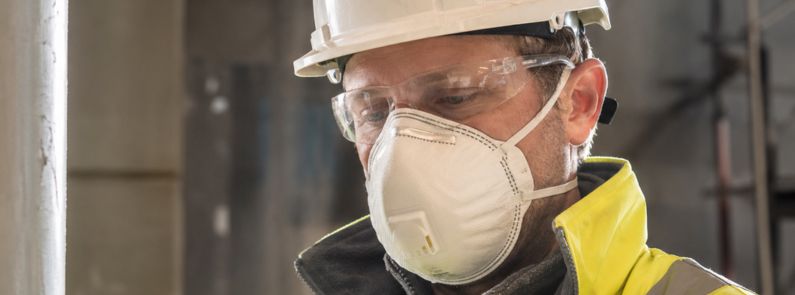
Most of the time, FFP1 and FFP2 disposables are the correct choice. An FFP1 mask (APF 4) handles basic dust like cotton or paper fibres. An FFP2 (APF 10) is the next step up for finer mists or higher dust concentrations. When procuring ppe masks for large teams, always consider the work rate and duration of the task.
Compliance on-site usually comes down to comfort. If a mask is hot and itchy, workers find excuses to take it off.
- Valved Masks: These are a priority for long warehouse shifts. They let heat out so the wearer stays cool.
- Non-Valved Masks: Use these for tasks like food prep or lab work where you need to protect the environment from the wearer.
Is Face Fit Testing mandatory for low-risk environments?
Yes. If the mask is tight-fitting, it must be fit-tested. There is no "nuisance dust" exemption in the UK. Without a documented fit test, your RPE program is legally useless. An FFP1 mask only protects the wearer if the seal is air-tight.
A poor seal is a waste of money. We provide nationwide Face Fit Testing, but for larger workforces, we recommend our Train-the-Trainer courses. This allows your own staff to handle testing in-house, which is far easier than trying to coordinate external sessions for every new hire or shift change.
How does procurement help with safety compliance?
Buying certified equipment provides more than a discount. It allows for standardisation. If every site uses the same mask, your fit-testing data stays consistent and your training is simplified.
At Protective Masks Direct, we provide tiered pricing and can bundle respirators with head and eye protection or gloves. We keep your supply chain resilient so you aren't caught short when a site inspection looms.
Ensure your workforce stays protected with verified, UK-compliant equipment.
Enquire about ppe mask for your next project. If you have any questions or need advice on choosing the right equipment for your project, please contact us.