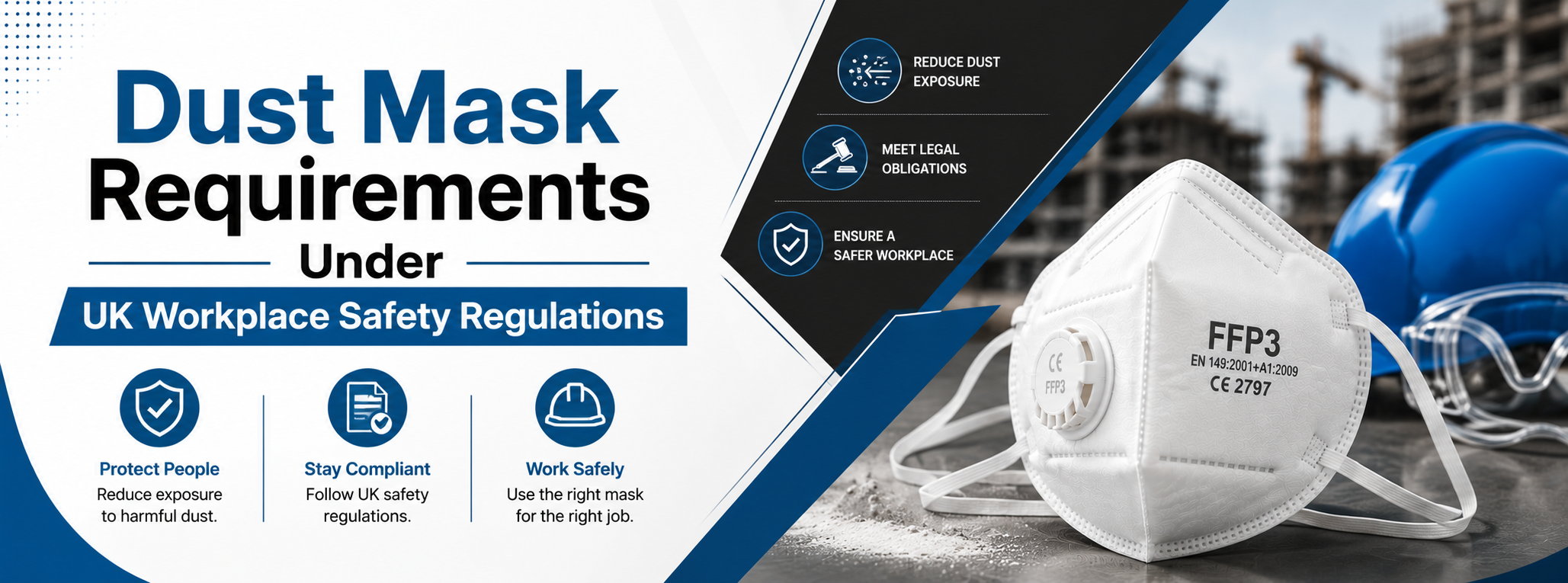
Airborne particulate exposure commonly occurs during mechanical contracting and fire sprinkler system installations. Continuous inhalation of airborne silica or metal shavings compromises life safety and damages respiratory function over time. Securing a certified dust mask protects on-site personnel and aligns strictly with UK regulatory frameworks.
What Are the Current UK Regulations for Respiratory Compliance?
The UK Health and Safety Executive require that respiratory protective equipment meets EN149 standards to protect on-site workers. Employers are legally obligated under the Control of Substances Hazardous to Health regulations (COSHH) to provide task-appropriate masks. Meeting these criteria prevents site shutdowns while protecting staff from long-term respiratory damage.
Life safety contractors operate in demanding mechanical environments everywhere. Structural drilling for fire suppression pipework generates immense volumes of microscopic debris. Because of this, regulatory frameworks specify that safety equipment undergoes rigorous laboratory testing before reaching your installation crew. Protective Masks Direct supplies required equipment that satisfies these mandatory compliance audits. Protective masks with correct classifications mitigate risks directly tied to mechanical contracting. Health and safety managers rely on our technical authority to decode these standards. We encourage buyers to browse and specify products directly from our category pages online.
How Does EN149 Certification Define Respiratory Safety?
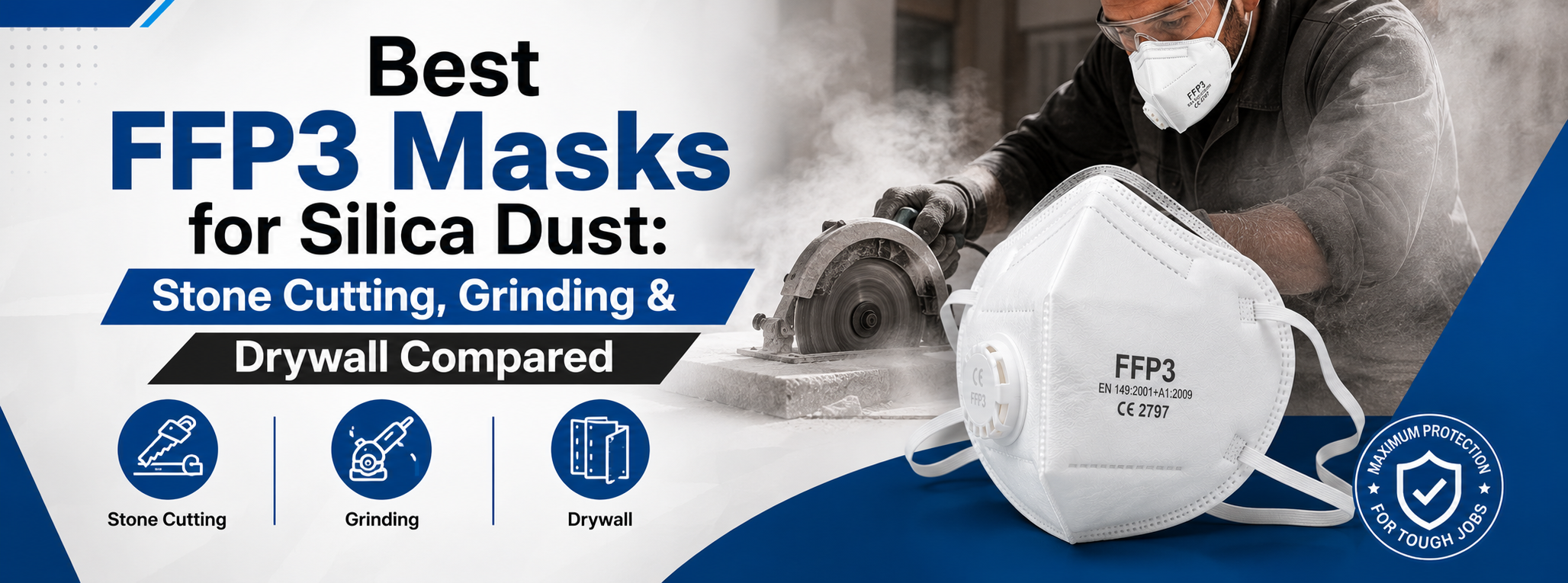
EN149 certification categorises respiratory gear into distinct filtration levels like FFP1, FFP2, and FFP3. Each classification determines the exact percentage of airborne particles the material filters under controlled laboratory conditions. This standard delivers reliable worker protection during intensive structural modifications and mechanical engineering projects.
Mechanical contractors working on primary sprinkler installations frequently encounter concrete silica and heavy masonry particles. FFP3 ratings filter up to 99 percent of these hazardous floating solids. FFP2 variants provide a minimum 94 percent filtration capacity suited for moderate dust environments. Our certified product line offers clear specifications for procurement teams updating their safety manifests to maintain operational continuity.
Why Do Mechanical Contracting Environments Require Specific Filtration?
Installing fire suppression systems releases specific hazardous materials demanding targeted filtration capabilities. Concrete dust, metal shavings, and toxic insulation particles saturate the air during pipework mounting and ceiling breeches. Selecting the appropriate dust face mask protects the operational integrity of your personnel and the surrounding building infrastructure.
General construction materials pose physical health hazards when displaced by heavy machinery. Life safety framework designers must account for the respiratory threats produced during the physical implementation phase. Industrial trades interact with asbestos residuals and waste during older building retrofits. A highly rated dust mask stops these exact microscopic hazards from entering the lungs. You can rely on our established equipment to perform under demanding site conditions. Request guidance from our support team to match hazard profiles with appropriate filtration grades.
Procurement teams must evaluate the following site conditions before placing orders:
- Specific particulate density generated by structural drilling
- Expected duration of the mechanical installation phase
These assessments dictate the required classification for your project demands.
What Protection Classifications Apply to Fire Suppression Installation?
High-level FFP3 protection acts as the minimum requirement for drilling masonry and cutting core steel during sprinkler system fit outs. These mechanical tasks generate fine respirable silica that bypasses lower-grade filtration materials. Securing maximum protection preserves worker health while maintaining strict adherence to industrial site safety parameters.
Procurement and operations managers must actively source equipment capable of handling intensive mechanical stress. Relying on inferior materials compromises your overall life safety system deployment. Protective Masks Direct offers an extensive catalogue of FFP3 equipment tailored for high-risk industrial applications. Bulk purchasing certified equipment directly through our product pages reduces overall project overheads. Your business retains capital while maintaining an uncompromising approach to frontline mechanical safety.
How Often Is Face Fit Testing Required for Compliance?
Face fit testing must occur before a worker wears a specific respiratory product for the very first time. Subsequent tests become legally required whenever the user experiences significant facial changes like severe weight loss or dental surgery. Regular evaluations verify the mask maintains an airtight seal against hazardous particulate matter.
An unsealed dust mask entirely negates the laboratory certification of the underlying material. Health and safety managers understand that face fit testing forms the foundation of respiratory compliance. Even the highest-rated product fails if ambient air leaks through the outer structural edges. We offer face fit testing services alongside our core product distribution. Contact our specialist team today to reserve a testing session for your on-site workforce.
How Can Procurement Teams Secure Bulk Compliance Equipment?
Procurement managers can secure bulk deals by ordering directly through dedicated wholesale portals or contacting our commercial sales desk. Purchasing larger unit volumes unlocks financial savings for expansive mechanical contracting firms. High-volume orders guarantee your operational teams never experience supply chain shortages during critical project phases.
Managing safety equipment inventories for large-scale fire sprinkler installations requires consistent supplier reliability. Frequent reordering disrupts project timelines and stretches assigned budgets. Consolidating your respiratory equipment purchases maintains site compliance with minimal logistical friction. Protective Masks Direct holds over 20 years of uninterrupted industry expertise in fulfilling major commercial orders. See our full selection of bulk packages online to immediately secure your site safety.
What Do Customers Ask About Respiratory Safety Equipment?
Workers frequently ask questions regarding the practical lifespan and testing requirements of disposable respiratory gear. Health and safety teams must address these operational queries to guarantee total compliance across all active installation sites. Understanding these basic principles eliminates dangerous assumptions during intensive mechanical contracting routines.
Open communication regarding safety equipment reduces friction between management and frontline operators. Clear guidelines dictate that everyone understands their equipment parameters precisely. We compile these insights based on decades of direct technical consultation with industry leaders. Review the following industry queries to streamline your internal compliance training protocols.
How Long Can You Safely Wear Respiratory Protection?
Most disposable respiratory products are strictly designed for a single eight-hour working shift under normal environmental conditions. Humid mechanical environments or intense physical labour reduce this effective usage window significantly. Workers must discard the equipment immediately if breathing becomes difficult or the structural integrity fails.
Saturated materials lose their certified filtration effectiveness rapidly. Moisture buildup from heavy breathing degrades the internal electrostatic charge that traps dangerous airborne particles. You must enforce immediate replacement protocols under specific physical conditions. If the wearer experiences noticeable breathing resistance or dust visually soils the internal filter lining, they need a new mask. We encourage procurement departments to provision bulk supply orders to support adequate replacement intervals.
What Makes FFP3 Different from Standard Face Coverings?
FFP3 equipment provides maximum filtration of highly toxic particles and aerosols under rigorous EN149 laboratory testing benchmarks. Standard fabric coverings offer zero defined filtration standards and legally cannot qualify as protective respiratory equipment. Utilising a certified dust mask meets strict industrial health regulations natively.
Life safety system installations demand equipment that undergoes meticulous scientific validation. Operating near disturbed asbestos or fine concrete requires an impenetrable physical barrier. Standard face coverings completely fail to trap these microscopic structural threats. Depend on our certified FFP3 catalogue to supply the actual protection your site engineers require.
Why Do Health and Safety Managers Require Formal Fit Tests?
Formal fit tests generate legally binding documentation proving that an employer provided adequate protective measures for known site hazards. Regulatory bodies actively demand this paperwork during routine inspections or post-incident workplace investigations. Supplying this proof shields the organisation from severe financial penalties and reputational damage.
Documentation remains as important as the physical equipment in modern mechanical contracting. A strong compliance record proves institutional commitment to life safety framework implementations. Direct your workforce to our testing specialists to secure this mandatory compliance paperwork. We heavily leverage two decades of experience to keep your business operating legally. Actionable records protect both worker health and corporate viability simultaneously. Contact Protective Masks Direct now to equip your teams with proven compliance gear.
Frequently Asked Questions
1. How long can you wear a disposable dust mask?
Most disposable FFP masks are designed for a single eight-hour working shift, though this can vary by manufacturer and site conditions. Heat, humidity, or heavy breathing can reduce this window, so always check the manufacturer's guidance and replace the mask immediately if breathing becomes difficult.
2. What's the difference between FFP2 and FFP3 masks?
FFP2 masks filter a minimum of 94% of airborne particles, while FFP3 masks filter a minimum of 99%, making FFP3 the higher-grade option for fine respirable silica and other high-risk mechanical contracting tasks. The right choice depends on the specific hazard level identified in your site's risk assessment.
3. Is a fabric face covering the same as an FFP dust mask?
No. Standard fabric face coverings have no certified filtration rating and do not meet EN149 requirements, so they cannot legally be used as respiratory protective equipment (RPE) on site. Only masks certified to FFP1, FFP2, or FFP3 standards qualify as compliant RPE.
4. How often is face fit testing legally required?
Face fit testing must be carried out before a worker wears a specific mask model for the first time, and repeated whenever their facial characteristics change significantly, such as noticeable weight loss or dental work. It's also worth noting that a fit test is specific to the exact mask model and size — switching to a different model requires a new test.
5. Do I need bulk safety equipment orders for large fire sprinkler projects?
Yes, for large-scale mechanical contracting projects, bulk ordering helps prevent supply shortages during critical installation phases and reduces overall procurement costs. Consolidating orders through a dedicated wholesale account also simplifies compliance record-keeping across multiple sites.