
Airborne toxicity on-site indicates a fundamental breakdown in your safety strategy. Inhaling microscopic grit leads to irreversible lung damage and leaves employers wide open to legal action. You have to match the air purifying respirator to the specific hazard to stay on the right side of the HSE.
Standard face coverings offer zero protection against industrial contaminants measured in microns. Safety managers must align equipment specs with verified filtration levels rather than relying on guesswork. Having supported UK industry through every major respiratory crisis of the last two decades, we provide the verified equipment and fit-testing services that high-risk environments demand. To help you secure your workforce, we have outlined navigating the complexities of air-purifying filtration.
How does an air purifying respirator work?
An air purifying respirator functions by pulling contaminated air through specialised media to trap particles or neutralise vapours before they hit your lungs. Whether the mask relies on your own breath or a battery-powered fan, that barrier depends entirely on two factors: the filter’s rating and the integrity of the mask's seal.
In environments with stable oxygen levels, these respirators serve as your primary defence. They are engineered to isolate your lungs from solid and liquid aerosols. However, performance falls off a cliff if the face seal is imperfect or if the filter class fails to match the concentration of the toxin on-site.
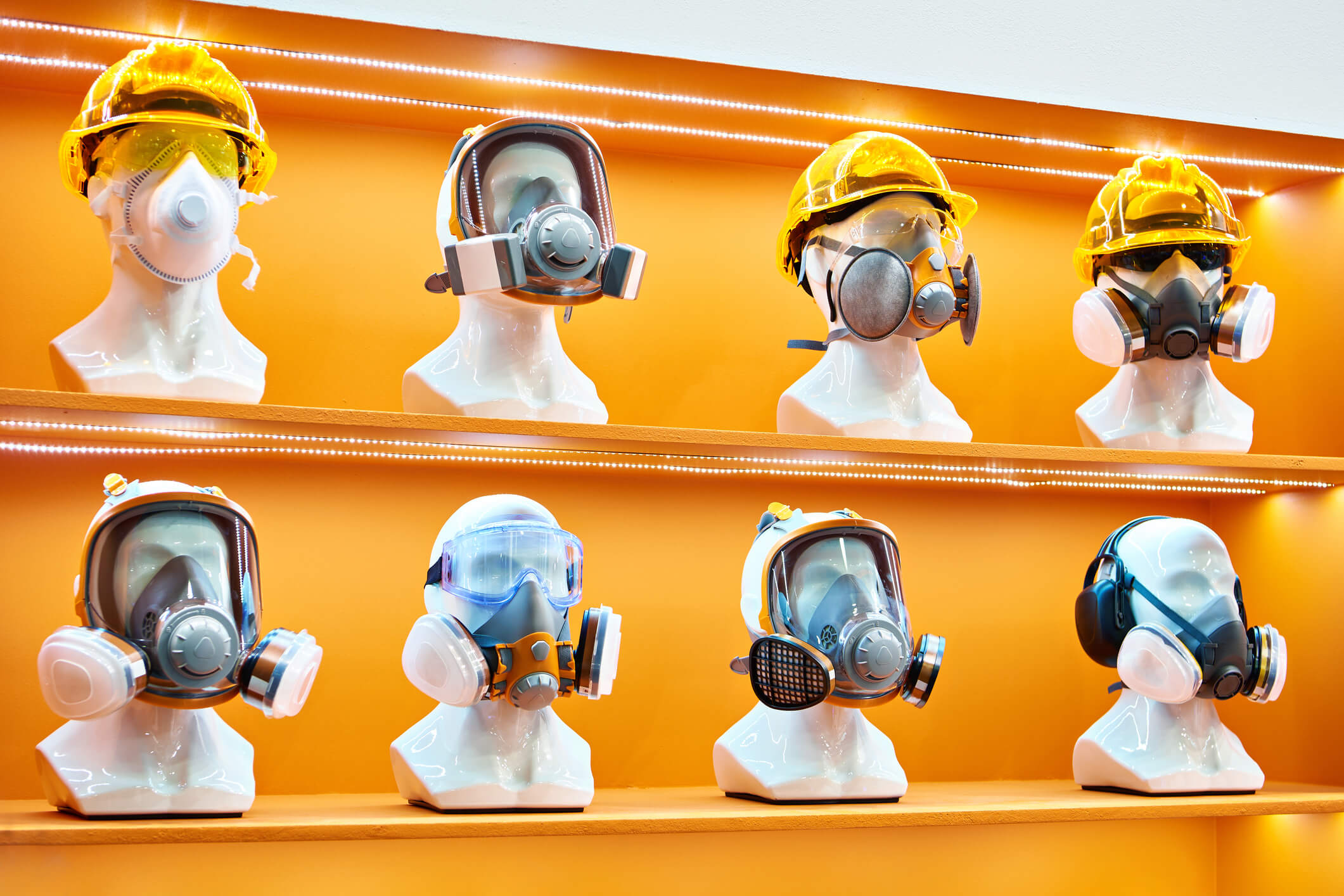
On most sites, you’re looking at one of two setups:
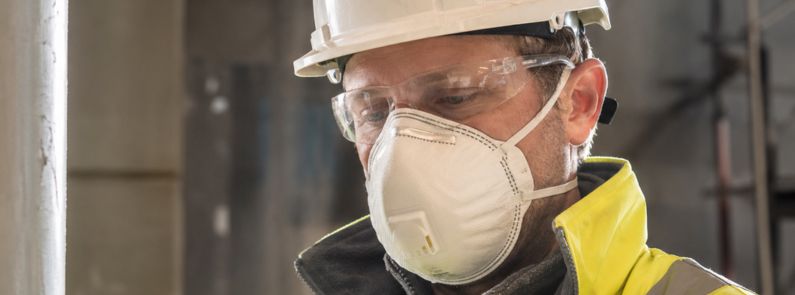
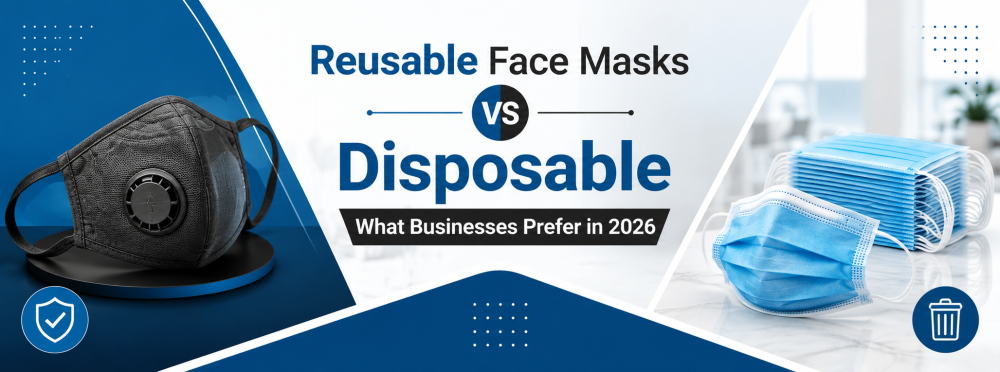
- Disposable Respirators: These single-use "filtering facepieces" (FFP1, FFP2, or FFP3) are maintenance-free. Once the filter is clogged or the shift ends, you bin the mask.
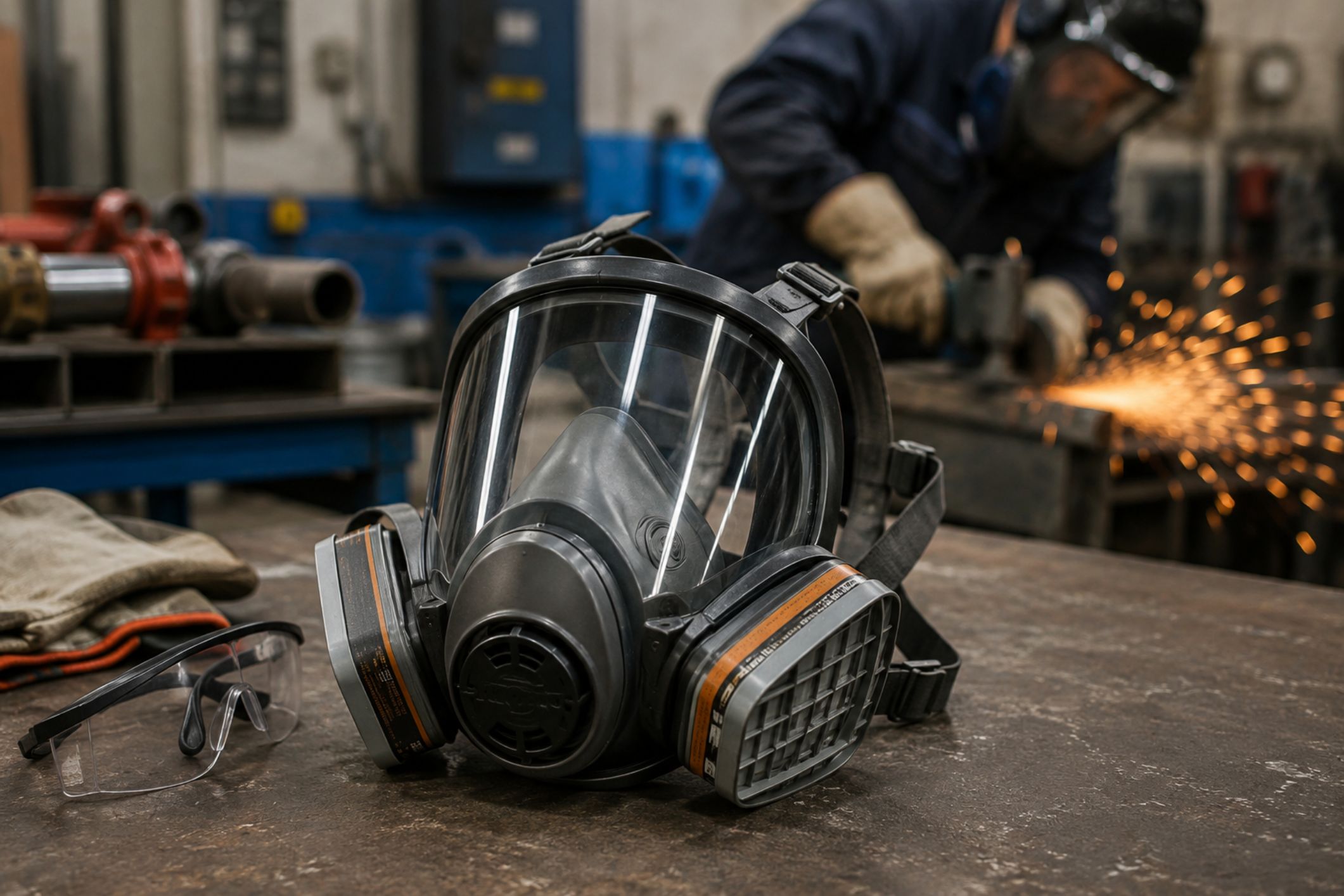
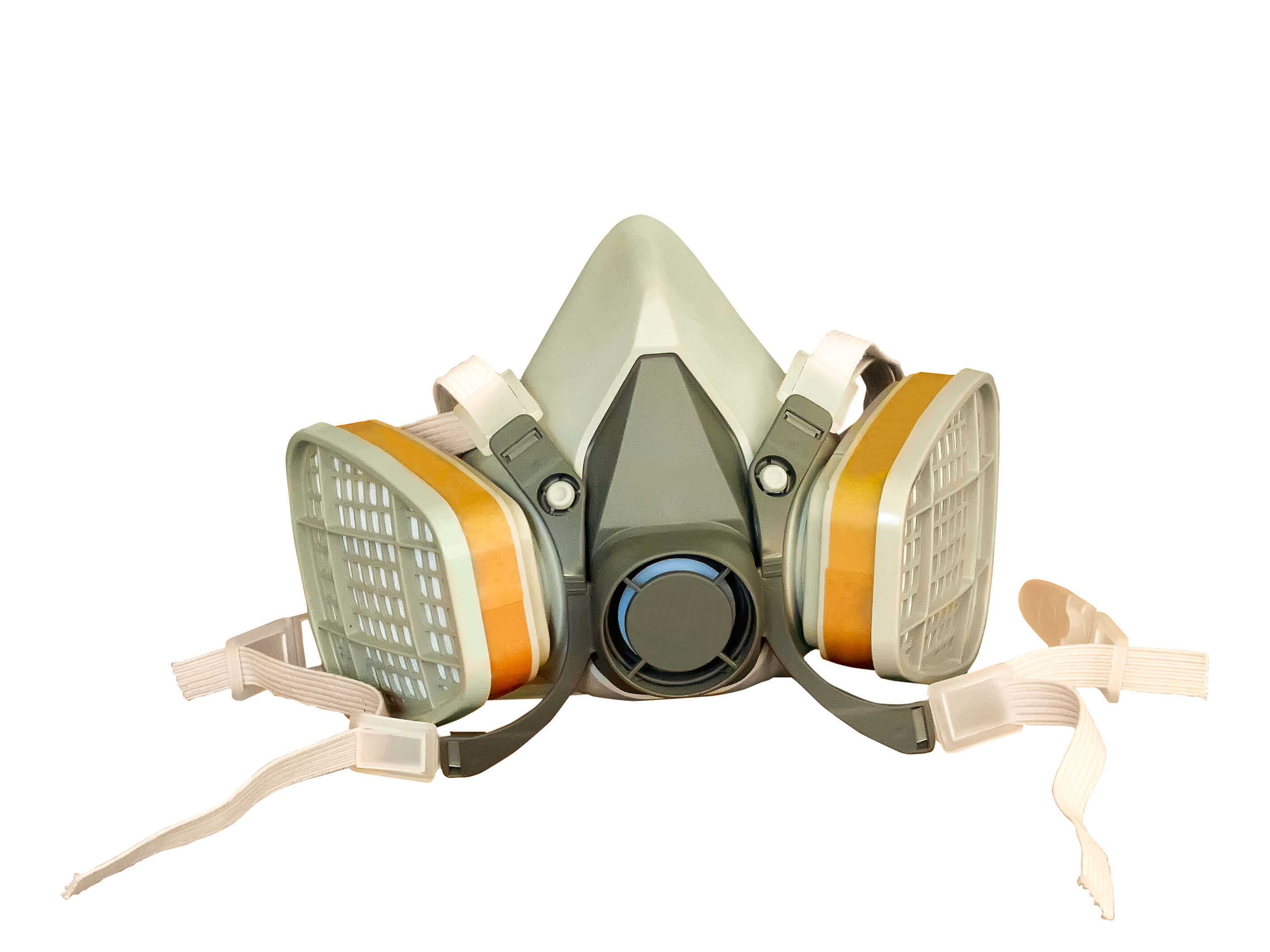
- Reusable Half or Full Face Masks: The professional workhorse. These use replaceable cartridges and provide a sustainable, heavy-duty solution for long-term exposure and higher contaminant concentrations.
What are the main toxic risks that require high-level filtration?
High-level filtration is the only barrier against life-changing conditions like silicosis and occupational asthma. The HSE expects you to assess the environment and provide RPE that brings exposure levels below safe Workplace Exposure Limits (WELS).
Don't expect a standard dust mask to touch chemical vapours. You must be specific about the risk:
Particulates
- Silica Dust: A constant threat during concrete cutting, masonry, and stone grinding.
- Wood Dust: Hardwood dust in joinery is a known carcinogen, not just a nuisance.
- Metal Fumes: These fine particles bypass basic masks easily during welding and smelting.
- Asbestos: The highest-consequence risk found during demolition and refurbishment.
Gases and Vapours
- Organic Vapours: Released by solvents, heavy-duty painting, and varnishing.
- Acid Gases: A major concern in chemical processing and metal plating.
- Ammonia: Often found in industrial refrigeration and large-scale agricultural environments.
If the spec is wrong, the worker is breathing in toxins. Sticking to EN149 for disposables or EN140/EN136 for reusables is the bare minimum for staying legal.
What is the difference between FFP1, FFP2, and FFP3 masks?
Disposable masks live and die by the EN149 standard. The main difference is filtration efficiency: FFP1 filters 80% of particles, FFP2 filters 94%, and FFP3 provides the highest protection at 99%.
- FFP1 (APF 4): Only suitable for low-level nuisance dust, like hand sanding or basic DIY.
- FFP2 (APF 10): The standard for moderate dust levels in construction and agriculture.
- FFP3 (APF 20): Mandatory for high-toxicity jobs such as asbestos handling, pharmaceutical powders, and viral protection.
Always check the Assigned Protection Factor (APF) against the hazard level. For high-risk sites, you need a guaranteed supply of FFP3s to keep the job moving without safety stoppages.
Why should you choose a Powered Air Purifying Respirator (PAPR)?
A PAPR becomes the obvious choice when workers are in masks for over an hour, have facial hair, or are performing physically demanding tasks. A PAPR uses a battery fan to force filtered air into a hood, removing the "breathing resistance" found in passive masks.
Powered units are the professional choice for several reasons:
- Managing Fatigue: Breathing through a filter using "lung power" causes significant strain during long shifts. A PAPR eliminates this.
- The "Beard Problem": This is a constant headache for site managers. Tight-fitting masks cannot seal over stubble. Because PAPR hoods are loose-fitting, they are the only compliant way for workers with beards to stay safe.
- Double the Protection: Most PAPR systems offer an APF of 40 twice the protection of a standard FFP3 mask.
A powered unit also keeps the user cool and prevents eyewear from fogging, which ensures the gear actually stays on for the duration of the task.
Is Face Fit Testing a legal requirement in the UK?
Yes. Under COSHH, CLAW, and MHSW regulations, you must prove that a tight-fitting mask actually fits the individual wearing it. Without a proper seal, the filtration material is useless.
Even a premium powered air purifying respirator requires testing if it uses a tight-fitting mask. Faces aren't static weight loss or even new dentures can ruin a seal that worked six months ago.
- Methodology: We run qualitative (taste) tests for half-masks and quantitative (particle counting) for full-face masks.
- Frequency: You need a new test if you switch mask models or if the wearer's facial features change significantly.
We provide UK-wide Face Fit Testing and Train-the-Trainer sessions. Don't wait for a failed HSE inspection to get your team certified.
Why is RPE procurement important for large sites?
RPE procurement keeps your site operational by preventing supply chain gaps and reducing the unit cost of high-consumption items like FFP3 masks.
We support sectors like construction, healthcare, and industrial manufacturing with tiered pricing and verified stock. With 18 years in the game, we refuse to stock the "grey imports" that recently hit the market. We only supply gear that meets strict UK and EU standards.
Contact us for advice on Face Fit Testing or to talk through your RPE needs.