
Respirators and face masks are necessary PPE for today's workforce. Although FFP3 disposable dust masks are thought to provide the best protection, wearing a face mask alone is insufficient to ensure complete protection, particularly if you operate in a hazardous area.
Face masks are not one-size-fits-all; to maximise protection, they must fit the face tightly. To guarantee a good fit and prevent air from passing through without first being filtered, face fit testing is necessary.
Let us understand how it is important to consider your facial specifications before buying the right FFP3 face mask and different face challenges.
Why Face Shape Matters in FFP3 Mask Performance?
The way an FFP3 mask seals on you is greatly influenced by the shape of your face. According to studies, the results of face mask fit testing vary greatly amongst individuals with diverse facial characteristics, such as face height, mouth width, and the amount of soft tissue beneath the mask edge.
While some might leave gaps that let unfiltered air enter, those with forms that "fill" more of the mask area typically seal better. Because of this, there is no one-size-fits-all solution, and fit testing is necessary before depending on any FFP3 face mask for protection.
Understanding Face Shapes and Their Fit Challenges
An FFP3 mask’s ability to seal and remain secure throughout the day is strongly impacted by the shape of the face. Tiny gaps or pressure points may result from slight variations in chin length, nose bridge form, cheekbone height, or jaw width. Because of this, it is difficult for a single design to be both safe and comfortable for everyone.
| Face Shape / Feature | Common Fit Challenge |
|---|---|
| Round Faces | Fullness disrupts the seal around the jawline area. |
| Narrow Faces | Loose seal along cheeks, leading to side leakage |
| Long Chin or Sharp Jawline | The bottom edge may lift during talking or movement. |
| High Nose Bridge | Gaps may form near the eyes without proper adjustment. |
| Low or Flat Nose Bridge | Masks tend to slip downward more easily. |
FFP3 Mask Features That Improve Fit for All Face Shapes
According to EN 149, FFP3 disposable dust masks are the best particulate filters in Europe. When used properly, they usually deliver 99% filtration and extremely little inward leakage. These masks are designed to fit securely over the mouth, nose, and chin. They often have two straps and adjustable nose clips to help them fit the unique features of each wearer's face.
Let us understand some other features that make it a perfect addition to your PPE kit.
1. Flexible Nose Clip
In order to improve the upper seal and minimise gaps near the eyes, a moldable metal strip in masks like Non-Valved HY9330 helps shape the protective face mask over high, low, or thin nose bridges.
2. Edge of the Flexible Face Seal
Soft sealing materials in the Ultimate Flat Fold Valved half face mask minimise side leakage and pressure discomfort by conforming to the various forms of the cheek and jaw.
3. Two Elastic Headbands
A FFP3 face mask like the Moulded Disposable M632 remains steady while moving, speaking, or working long shifts due to multiple sturdy straps that uniformly distribute strain across the head.
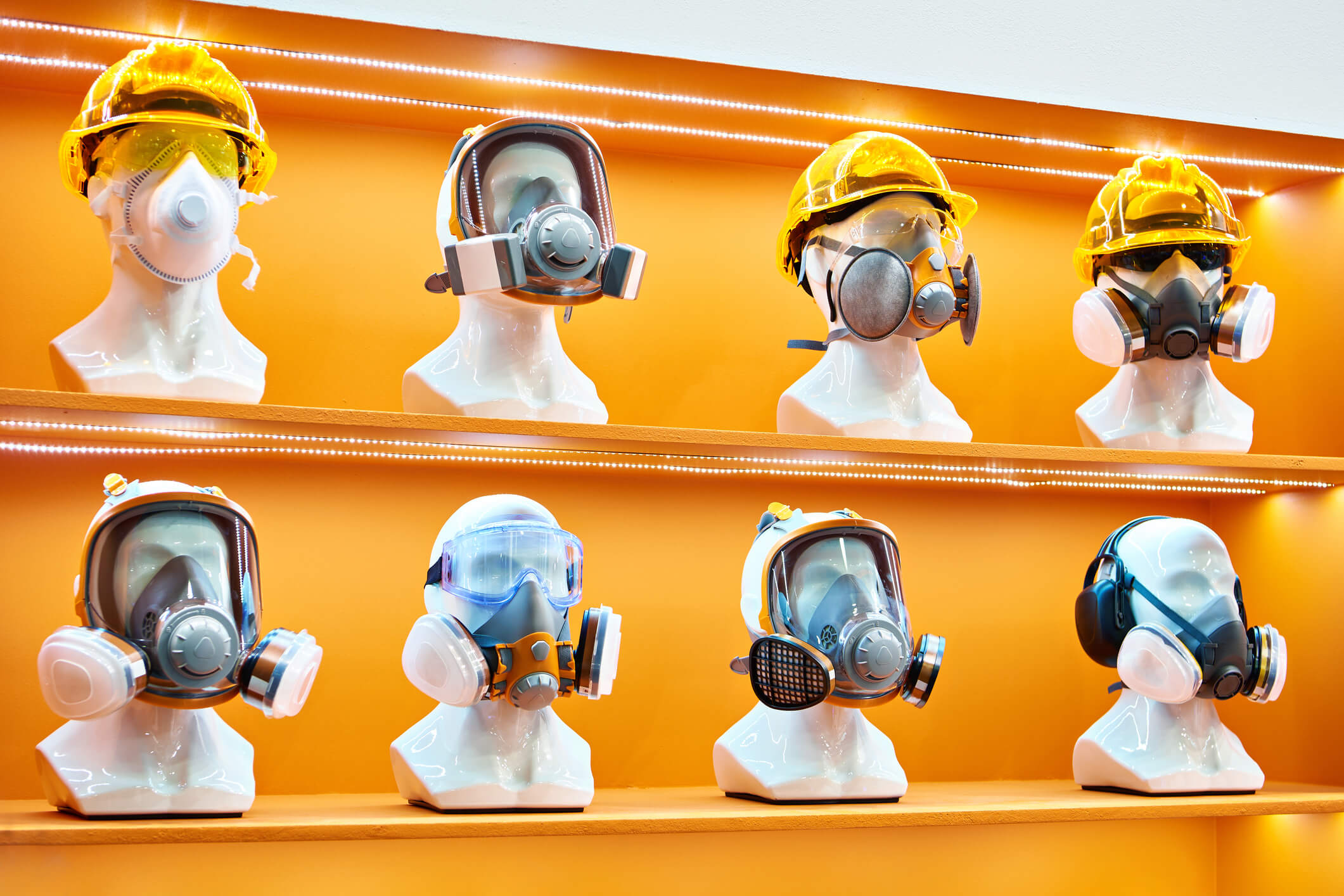
4. Various Shape Designs (Duckbill, Cup, Fold-Flat)
You can select a design that better fits the measurements of their faces because different structures work well with different facial features, like a cup-shaped Flat Fold mask.
5. Structured Support for the Chin and Beard
Long chins, beards, or sharp jawlines are better covered by extended lower panels, which also keep the mask from rising when speaking.
How to Self-Check Your Mask Fit Before Buying?
It is recommended that a fit check be conducted each time an FFP3 mask is worn, which should not be mistaken for face mask fit testing. Here’s how you can do it:
- Using both hands, cover the front of the respirator, taking care not to interfere with its fit. Then, holding the cup respirator in one hand and the nose piece in your fingertips, let the headbands dangle freely below your palm.
- Exhale sharply while wearing an unvalved respirator; inhale sharply while wearing a valved respirator.
- Reposition the nose clip to stop any air leaks around the nose. Continue the fit check described above until the leak is fixed.
- Work the straps back along the sides of the head to stop any air leaks at the margins of the respirator. Until the leak is completely removed, repeat the fit check.
Facial Hair, Skin Sensitivity & Long-Wear Challenges
Stubble and other types of facial hair will hinder the FFP3 mask's ability to form a complete facial seal, which will almost guarantee that unfiltered air will get to the wearer. For optimum performance, clean shaving is recommended for high-risk situations.
In addition to the first-order consequences of facial hair, mask wearing can become uncomfortably hot and can worsen skin irritation. This occurs because the mask traps heat and moisture, and the strap friction and nose clip can cause chafing.
To acquire the most comfort from a mask, consider choosing one with a soft lining and made from hypoallergenic materials, especially for prolonged use.
Smart Buying Framework: How to Choose the Right FFP3 Mask?
Choosing the right FFP3 face mask might sound daunting, but many 3-layer face mask options are both protective and comfortable. Many 3-layer face masks have a variety of comfort and protective features to pass. The deciding factors usually come down to the material used, how well the face mask is fitted, and what the purpose of the face mask is.
1. The Certified Protection Standard
Always make sure that EN 149 standards are being followed and that the certification marking is correct. The CE certification and classification should be prominently displayed on authentic FFP3 face masks. Filtration claims are unreliable in the absence of confirmed certification.
2. Face and Fit Compatibility
A mask needs to fit the shape of your face. Think of shapes like duckbill, fold-flat, or cup. Strong elastic straps and movable nose clips contribute to a safer, tighter seal.
3. Design of Valve or Non-Valve
Valved masks allow for easier breathing during long shifts as they prevent the buildup of heat. In public or healthcare situations where keeping the outward spread of germs is equally important, non-valve masks are used.
4. Duration of Intended Use
Depending on how frequently you plan to wear it, choose between reusable and disposable choices. Comfort-focused designs and long-lasting materials may be necessary in environments with prolonged wear.
5. Breathing and Comfort
The lightweight design, soft inner linings, and reduced breathing resistance increase compliance. You are less likely to wear a mask appropriately or consistently if it is uncomfortable.
Common Fitting Buying Mistakes to Avoid
Effective respiratory protection requires a mask that fits properly. However, many individuals ignore this important factor. Let us examine the typical errors made while choosing a mask fit.
- Many people select masks that don't fit the shape of their faces. They think there is a one-size-fits-all solution, but that is rarely the case.
- Another neglected factor is facial hair. It may cause the mask's seal to break, decreasing its efficacy.
- A bad fit might result even if you select the correct size if you don't use customizable features. The straps ought to be snug but cosy.
- It is also problematic to use a mask material that irritates the skin. It deters wear and has an impact on comfort.
- Make sure there are no spaces around the edges of the FFP3 face mask. A good fit should minimize these gaps.
- Straps and other adjustable elements are essential for a snug fit. These characteristics are present in many masks, but users often neglect to adjust them properly.
- When wearing glasses, fogging suggests a fit problem. Many people become frustrated because they neglect face mask fit testing.
The Bottom Line
To make sure the 3-layer face mask suits your needs, there are a number of factors to consider. Since these masks effectively block airborne pollutants, it is imperative to comprehend their significance. Making an informed choice can be aided by determining your mask usage needs and researching the various materials used in your protective face mask.
Finding a mask supplier like Protective Mask Direct that fits the contour of your face is crucial because comfort and fit are particularly important for prolonged use. You can evaluate the price and accessibility of high-quality masks. Find the FFP3 mask that fits your needs today!
FAQs
Is it possible to fit any facial shape with a single FFP3 face mask?
No. There are many different types of face structures, including round, angular, broad, and narrow. One person may have gaps in a mask that fits them beautifully. Size, shape, and strap design are therefore important considerations when selecting an FFP3 respirator.
How can I tell whether my FFP3 mask is correctly sealing?
Check the seal. Put your hands over the mask and take a slow breath. It should give way a little. The fit is not secure if you can feel air leaking around the edges when breathing.
Do all FFP3 masks fit the same way?
No. Designs vary: duckbill, fold-flat, and cup-shaped. Nose clips and strap tension also differ. On the same face, two FFP3 masks may feel very different.
Is fit more important than filtration?
Indeed. If the seal is subpar, even the best filtration grade is ineffective. The air will always take the easiest route. A properly sealed, well-fitting mask provides better protection than by a loose, high-quality respirator.
Do reusable FFP3 masks fit better than single-use ones?
Yes. Reusable types typically have silicone seals that conform to the face and straps that may be adjusted. However, if sized appropriately, a well-made disposable mask can still offer a great fit.