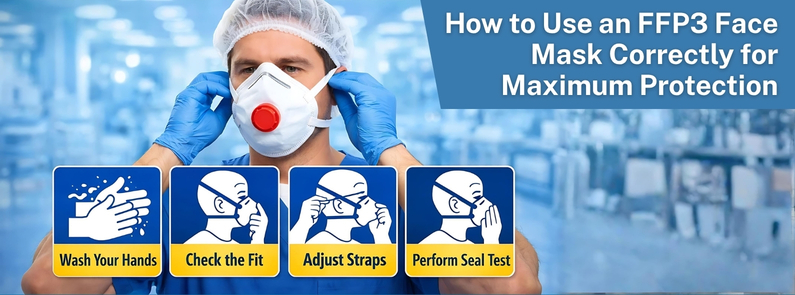
Are you putting on your FFP3 face mask correctly — or just putting it on? There is a significant difference, and it matters more than most people think. According to the Health and Safety Executive, poorly fitted or incorrectly worn respirators are among the leading causes of RPE failure in the workplace, even when the product itself meets the required standard. A mask rated to filter 99% of airborne particles will not deliver that performance if it is not worn properly.
From sealing technique to filter maintenance, correct usage is important for a compliant product to offer genuine protection. No matter what mask you are using: a single-use disposable or a long-term reusable respirator, the steps you take before, during, and after wearing your mask are just as important as the mask you choose.
When Do You Actually Need an FFP3 Face Mask?
FFP3 respirator face masks should be considered when the workforce is exposed to high concentration or high toxicity airborne hazards which can’t be effectively managed through engineering controls alone. FFP3 is the highest rating of disposable filtering facepieces as rated by the EN 149 standard.
FFP3 Mask should be considered when the workforce is exposed to the following situations:
- Cutting, grinding, or drilling silica-containing materials like concrete, stone, or brick.
- Disturbing or removing asbestos-containing materials under licensed or non-licensed conditions.
- Handling radioactive materials, carcinogens, or toxic metal fumes.
- Working with or around biological hazards such as clinical waste or infectious agents.
- Working in a poorly ventilated environment with confirmed high particulate conditions.
If the above situations apply to you, then you should know that you can’t use a surgical face mask or FFP1 or FFP2 facepieces to get the job done safely. In such cases, you should opt for the FFP3 face mask as it is the best option to ensure the workforce is properly protected from the hazards involved.
What Happens If an FFP3 Mask Is Worn Incorrectly?
Many workers think that wearing a high-rated mask will protect them automatically. In reality, the way they wear the mask actually determines how much they will be protected. Common consequences of incorrect use include:
| Error | What Goes Wrong |
|---|---|
| Loose face seal | Contaminated air enters the face, bypassing the filter |
| Mask worn over facial hair | Stubble and beard growth prevent the facepiece from sealing flat on the skin |
| Nose clip not shaped to the face | Air leaks around the nose bridge, the most common place for leakage |
| Mask pulled down between tasks | Leaves the wearer vulnerable to the original airborne contaminants during rest periods |
| Dirty hands during the donning procedure | Direct contamination of the inside of the facepiece |
| Using a single-use disposable repeatedly | The efficiency and integrity of the filter will be impaired by repeated use |
The Correct Way to Put on an FFP3 Face Mask
Here are the steps that you must follow when wearing a P3 face mask:
- Inspect the face mask. Before donning the face mask, ensure that it is not damaged. Any form of damage, like a torn face mask, deformation, a crushed nose clip, or worn straps, should be checked. If the face mask is damaged, it should be discarded.
- Wash your hands. When handling the face mask, ensure your hands are clean. Failure to do so will negate the face mask's purpose. Thus, the face mask should never be handled from the inside if the hands are dirty.
- Cup the face mask. Hold the face mask with your hand, with the nose clip at your fingertips and the straps hanging below your hand.
- Position the mask against your face. First, position the mask against your chin, followed by your nose and mouth. The nose clip will sit across the bridge of your nose.
- Next, secure the straps. Place the lower strap over your head and position it at the back of your neck. Next, place the upper strap over your head and position it high on the back of your head. The straps must not cross over each other.
- Mould the nose clip. Using both hands at the same time, press the nose clip against the bridge of your nose. Using only one hand will cause the seal to be uneven, resulting in a leak.
How to Perform a Quick Seal Check
A fit check, also called a user seal check, is a brief self-assessment performed every time a mask is put on. It does not replace a formal fit test. But it could be a quick verification to ensure that the mask is seated correctly before the wearer enters a hazardous environment.
Positive pressure check (exhalation): Cover the facepiece with both hands and exhale gently. If you feel air escaping around the edges of the mask, particularly at the nose bridge or sides, then the seal is not adequate. Readjust and repeat.
Negative pressure check (inhalation): Cover the facepiece and inhale sharply. The mask should collapse slightly inward against your face. If air rushes in around the edges rather than through the filter, there is a seal failure that must be corrected before entering the work area.
If the seal cannot be achieved after adjustment, the mask may not be the right model for that individual. Choose a different size or model to ensure better protection.
How to Use Reusable Masks and Mask Filters the Right Way?
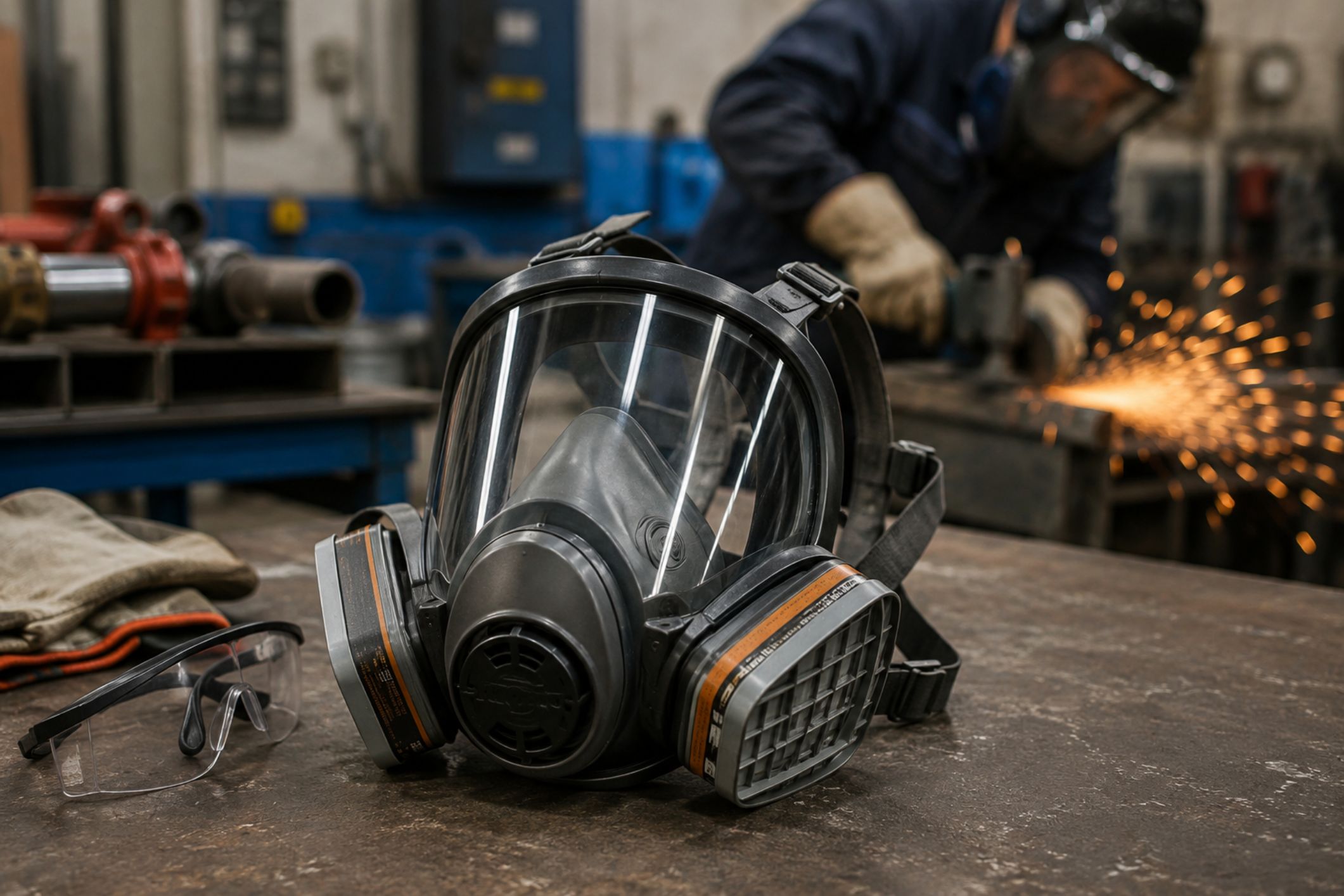
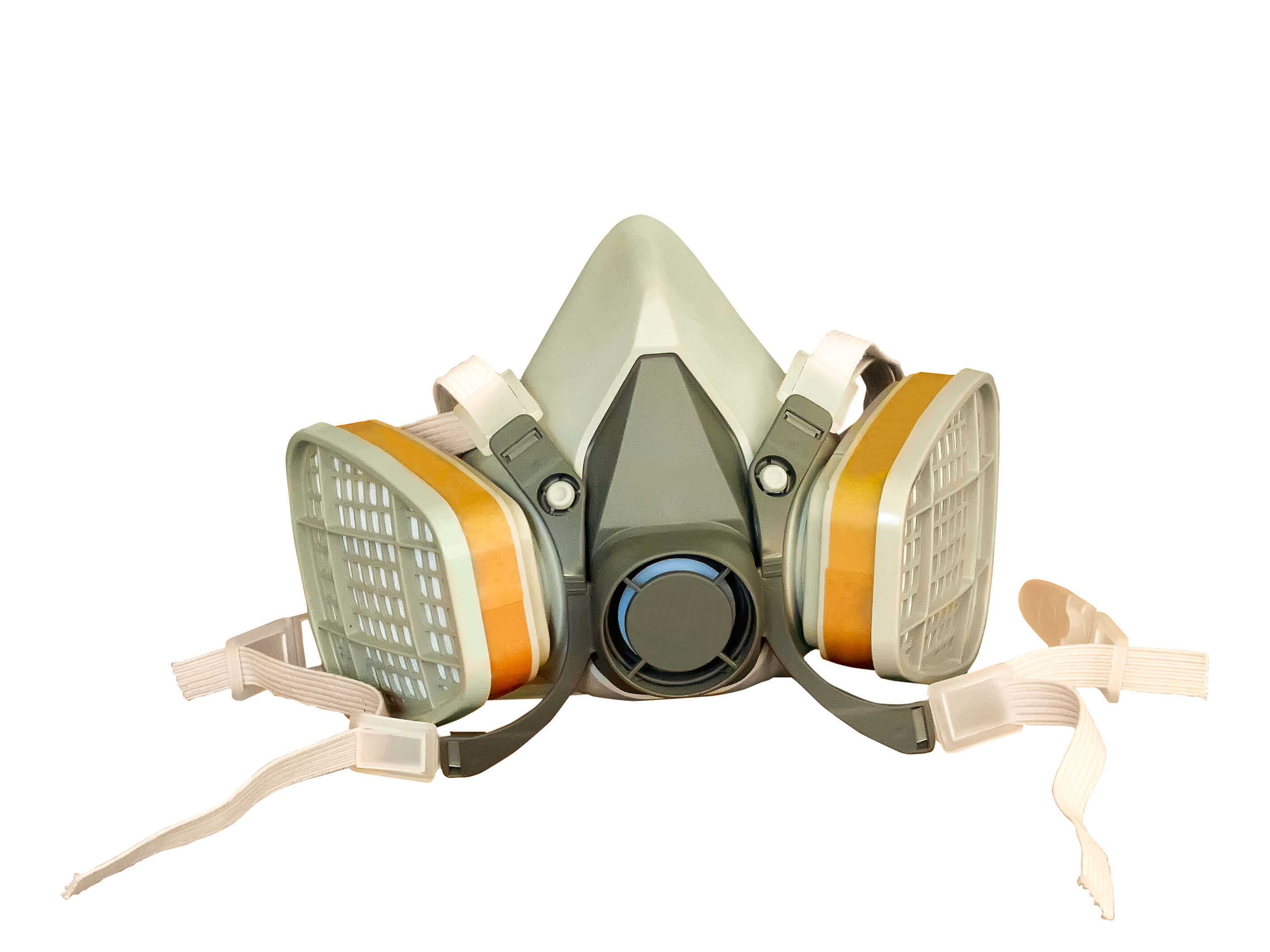
If you are using reusable mask, proper maintenance and correct filter management are important for better performance. A reusable half-face mask is only effective if the filters are fitted to it and the condition of the facepiece itself.
Mask filters should be:
- Replaced according to the manufacturer's scheduled intervals or when you find it difficult to breathe.
- Checked before each shift for damage or clogging. A blocked filter reduces protection.
- Stored in a sealed bag or container when not in use. It helps to prevent contamination.
- Selected to match the specific hazard. P3 particle filters differ from combined gas and particle cartridges. If you use the wrong filter type, it could affect your safety and compliance.
The facepiece itself should be:
Cleaned after each shift using the cleaning procedure recommended by the manufacturer. Avoid using solvents, excessive moisture, and abrasive materials. They can degrade the face seal or valve components over time.
Inspect the inhalation and exhalation valves regularly. A damaged valve can allow unfiltered air into the breathing zone without the wearer being aware.
Situations Where Workers Often Use Masks Incorrectly
To get better protection with an FFP3 mask, you have to understand the situations where you are most likely to get it wrong. This will help you identify areas of improvement, which will need more focus:
- Between tasks: The biggest mistake that employees make with their masks is taking them off or lowering them during short breaks while still at work. Even short exposure to unfiltered air can be a risk in hazardous work environments.
- During physical exertion: When an employee undergoes heavy physical work, they will breathe more, which means more air will pass through the mask. This means that if there is a slight malfunction, the mask will let more air through.
- When wearing other PPE equipment: Safety glasses, hearing protectors, hard hats, and other equipment accessories might not work well if the mask is not properly worn, which means you need to test them separately, not as a combination.
- At the end of a shift: Incorrect removal of a contaminated mask by pulling it off from the front may result in the spread of the hazardous material to the hands and face. Always remove the straps from behind.
- In hot or humid conditions: Discomfort may cause people to remove the mask by pulling it away from their face to breathe more easily. It means they are removing their protection at the moment they need it most.
Conclusion
Purchasing a certified FFP3 face mask is only the beginning of building a safe work environment. Perform a seal check every morning, mould the nose clip, and carefully remove the mask at the end of a shift. When you focus on these details with replaceable mask filters for daily use, you can maximise your protection in the workplace for a long time.
Still seeking the right protective gear for your team? Browse the full range of certified FFP3 respirator mask options at Protective Masks Direct,including P3 face mask models, half face mask respirators, disposables, and reusables for every industry and risk level.
FAQs
How do you check if an FFP3 face mask fits properly?
Exhale gently to check if air leaks around the edges of the mask, then inhale hard to check if the mask pulls in evenly.
How long can you safely wear an FFP3 mask?
Disposable masks should be changed at the end of every shift. Filters of reusable masks should be changed regularly or if breathing becomes difficult.
Do disposable masks give the same protection as reusable masks?
Both masks can offer high-level protection if they efficiently adhere to FFP3 standards.
How should FFP3 masks be stored after use?
Store unused disposables in their original sealed packaging, keeping them away from dust and moisture. Reusable masks should be cleaned, dried, and placed in a sealed container when not in use.
Do reusable masks require filter replacement?
Yes. Filters have a limited life. Replace the filter when it is due or when breathing through the filter becomes harder.