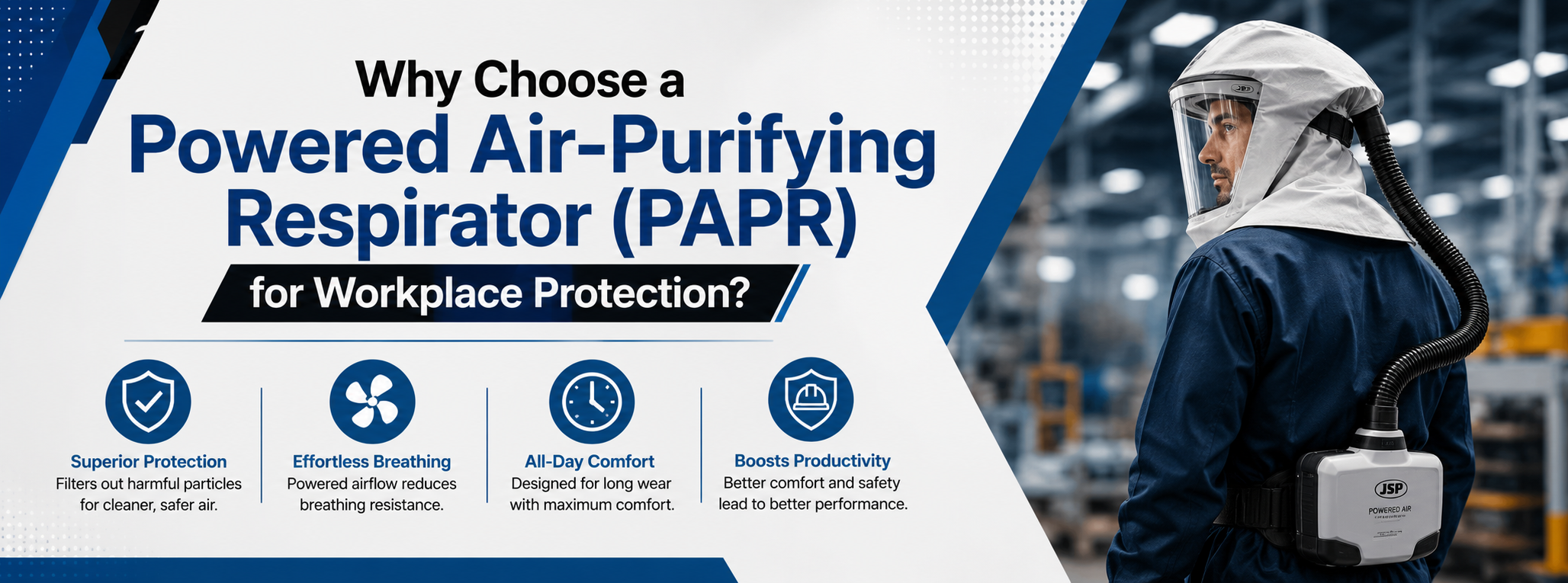
Workplace dust exposure remains a daily reality in fire sprinkler system design and installation. Unprotected prolonged exposure to hazardous particulates severely damages respiratory health over time. Investing in a certified Powered Air-Purifying Respirator (PAPR) protects workers against workplace dust hazards and ensures full regulatory compliance on your site. Protective Masks Direct supplies certified safety equipment backed by over 20 years of technical expertise. Health and safety managers can purchase directly from our product pages to improve their operational hygiene standards.
What Are the Core Workplace Dust Hazards in Life Safety Systems?
Core workplace dust hazards in life safety systems involve airborne particulates created during mechanical contracting and fire suppression installations. These manual tasks release fine silica dust, metal fumes, and concrete particulates directly into the breathing zone. Using a Powered Air-Purifying Respirator (PAPR) filters these hazardous substances to keep workers safe.
Enclosed industrial environments demand precise installation protocols for life safety systems. Tradespeople face constant exposure to harmful airborne elements that basic unpowered masks fail to manage over long operational shifts. Deploying reliable respiratory protection prevents long-term health complications and keeps your workforce operating efficiently throughout the project lifecycle. Practical professional equipment gets the job done without creating unnecessary delays for your skilled workers. Safety gear must perform when exposed to typical site contaminants, specifically concrete silica dust and heavy welding fumes.
How Does a Powered Air-Purifying Respirator (PAPR) Actually Work?
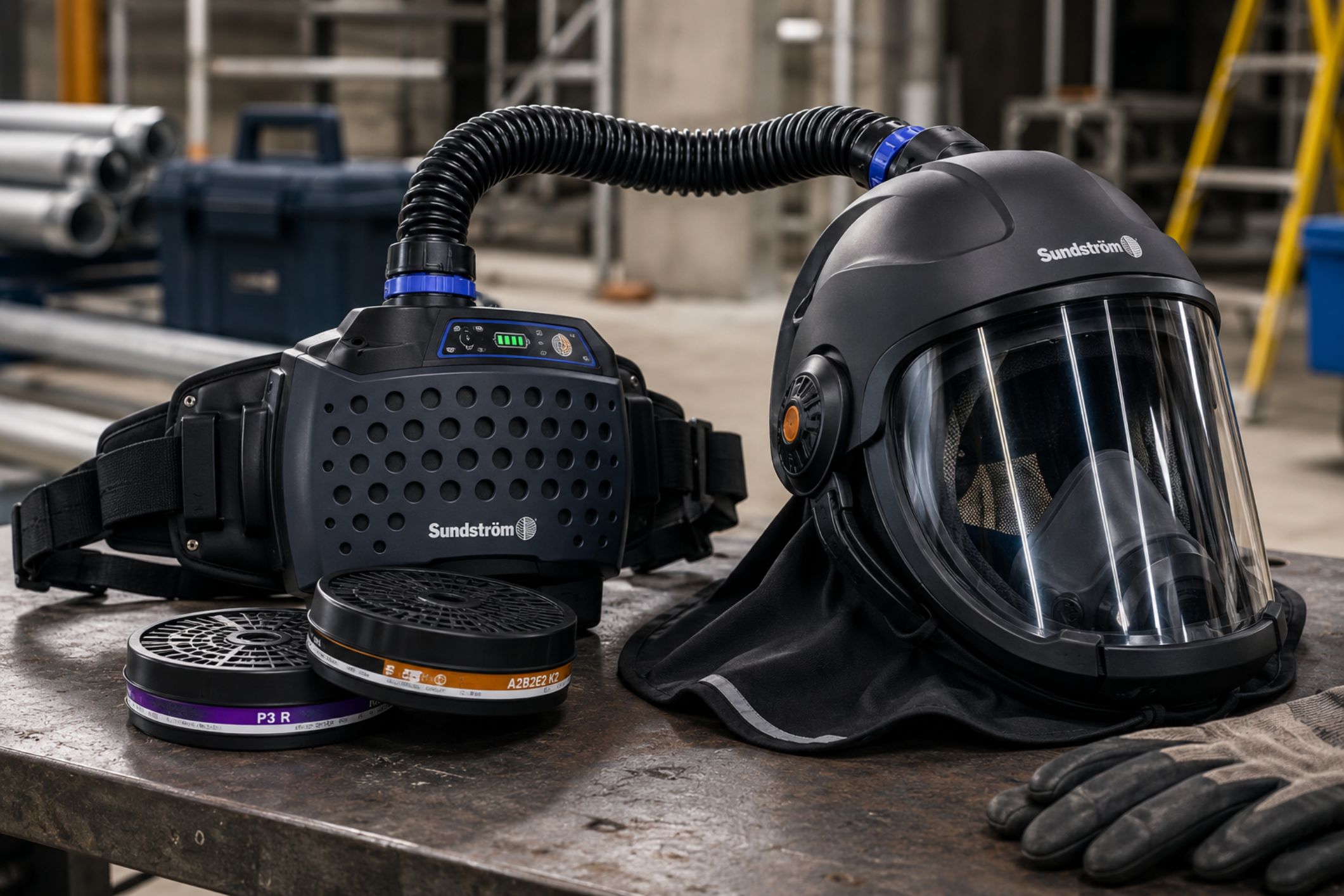
A PAPR works by using a battery-operated blower to pull contaminated air through high-performance filters. This mechanism purifies the air before delivering it directly into a sealed facepiece or hood. This positive pressure mechanism provides exceptional breathing comfort during heavy mechanical contracting work.
The continuous flow of clean air completely prevents the breathing resistance typically found in standard unpowered filtration masks. This mechanical advantage reduces worker fatigue and increases focus during complex fire sprinkler system design and installation tasks. The positive internal pressure means a tighter facial seal is less critical for styles utilising a loose-fitting protective hood, which is also why loose-fitting hoods don't require face fit testing. Procurement teams demand practical equipment that handles harsh site conditions without requiring constant manual adjustment. We supply robust filtration solutions built specifically for demanding industrial applications requiring long-term operational wear.
Which Protection Levels Do FFP1, FFP2, And FFP3 Offer?
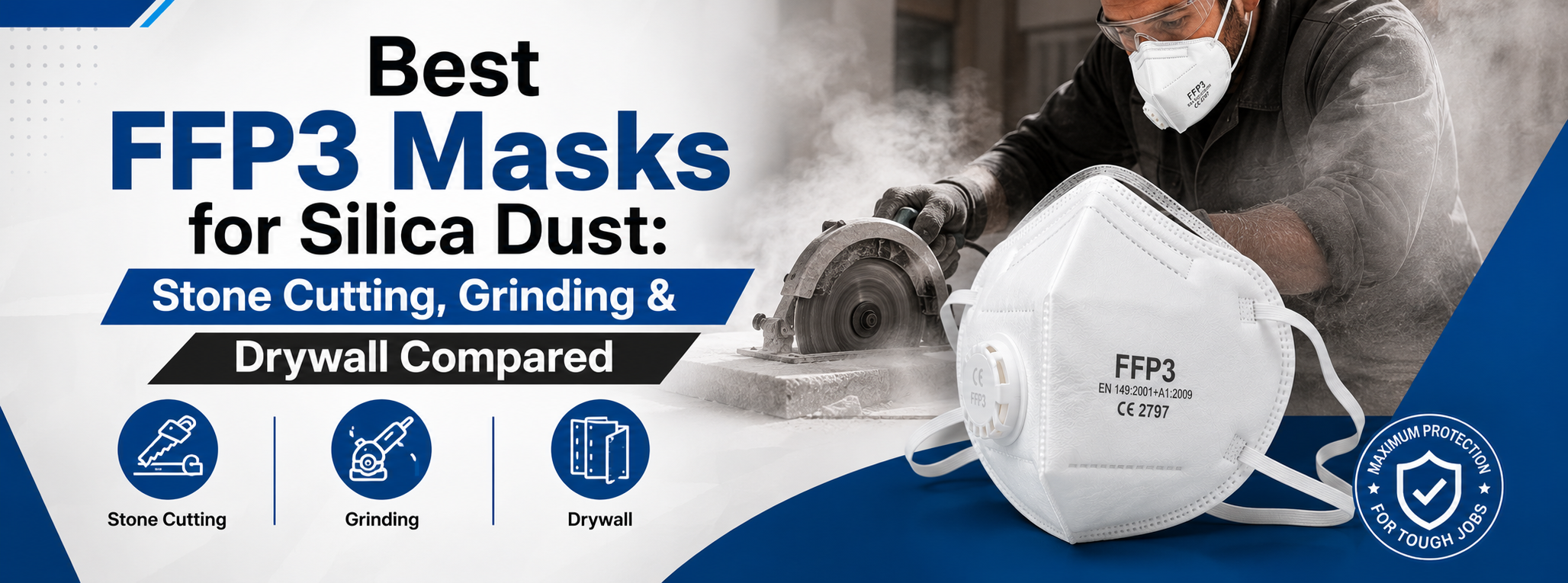
FFP1 masks filter out low levels of harmless dust to support basic site cleanliness. FFP2 masks block medium levels of hazardous particulates like standard wood dust. FFP3 masks provide high-level protection against fine toxic substances, strictly defending against metal fumes and airborne asbestos fibres during intense industrial workloads.
While standard disposable masks serve a clear operational purpose, continuous heavy industrial work naturally requires comprehensive technical defence. Moving from standard filtration up to a Powered Air-Purifying Respirator (PAPR) ensures a substantial reduction in breathing resistance. This continuous clean air protection proves absolutely essential for healthcare laboratory professionals and hazardous material workers. Protective Masks Direct helps operators navigate these strict EN149 compliance regulations easily.
Why Do Mechanical Contracting Trades Need Intrinsically Safe Gear?
Mechanical contracting trades need intrinsically safe gear to prevent accidental spark ignition in explosive or highly flammable industrial atmospheres. Specialised respiratory equipment guarantees no internal heat generation occurs within volatile work environments. Deploying compliance-certified gear protects workers while fully satisfying stringent mechanical site safety regulations.
Fire suppression installations frequently take place in high-risk zones where combustible gases or heavy dust clouds linger. Standard battery-operated equipment poses a massive ignition risk in these restricted hazardous locations. Intrinsically safe electrical systems eliminate this danger through heavily regulated specialist engineering limits. Maintaining project schedules requires equipment built specifically for these sensitive operational sectors. Supplying your team with certified intrinsically safe hardware removes administrative bottlenecks and regulatory delays during critical mechanical installations.
When Should You Upgrade to the Sundstrom SR 500 Range?
You should upgrade to the Sundstrom SR 500 Ready Pack for environments flooded with heavy airborne particulates and welding fumes. Regulatory frameworks govern volatile sites where combustible dust poses secondary disaster risks. For highly explosive environments, safety regulations demand the Sundstrom SR 500 EX intrinsically safe system.
These premium powered units represent the highest certified standard in continuous respiratory protection for skilled industrial trades. Both proprietary systems deliver robust particle filtration paired with seamless integration into highly demanding daily workflows. Built to last through rigorous usage, these units require minimal maintenance while providing maximum airflow capacity that workers rely on. Our trusted hardware serves multiple high-risk industrial applications requiring strict compliance documentation and ongoing reliability. Operations teams regularly deploy these proven Sundstrom systems in confined space metalworking and hazardous asbestos removal environments.
Do PAPRs Require Face Fit Testing?
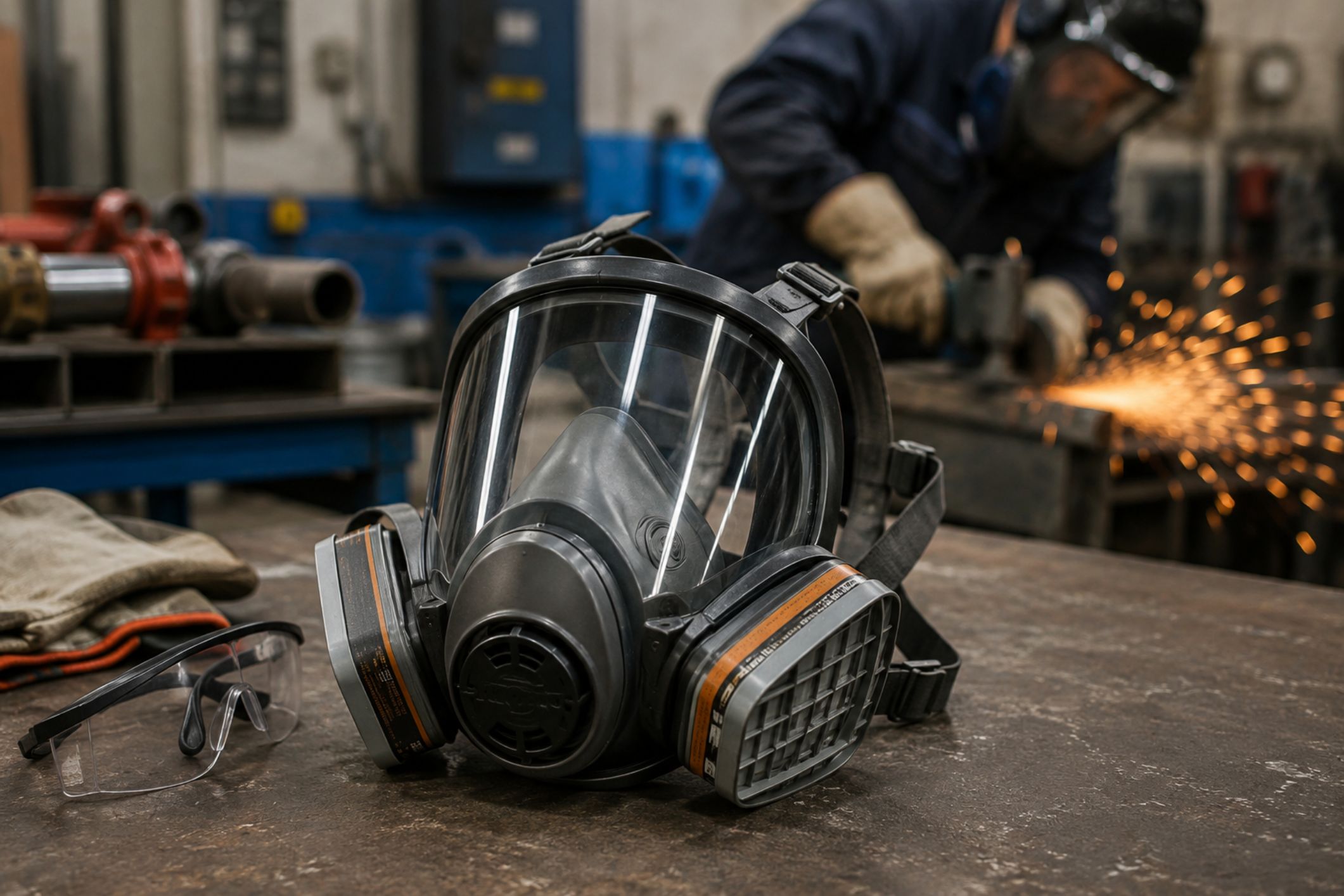
Face fit testing services maintain EN149 compliance by verifying that tight-fitting respiratory equipment seals perfectly against the wearer's face. This essential professional testing confirms that zero hazardous particles bypass the technical filters during active physical work. Loose-fitting PAPR hoods don't require face fit testing, but tight-fitting powered facepieces do, we advise booking accredited testing for those units.
Even the most advanced FFP3 masks fail their primary function if the crucial facial seal becomes compromised. Protective Masks Direct provides comprehensive face fit testing services to guarantee every unit performs precisely to its certified technical specifications. Securing professional testing removes operational guesswork and builds genuine trust among your active working teams deployed on site. Maintaining legal compliance requires regular assessments to adapt to equipment changes or immediate workforce variables. We strongly recommend scheduling rigorous testing during initial site onboarding for new workers or following significant facial weight changes.
What Are the Best Practices for Maintaining Powered Respiratory Equipment?
Maintaining powered respiratory equipment correctly is essential for preserving performance, protecting workers, and supporting ongoing compliance. Even the most advanced Powered Air-Purifying Respirator (PAPR) depends on routine inspections and proper care to deliver consistent protection.
Workers should inspect their equipment before every shift, checking battery charge levels, filter condition, airflow performance, seals, hoses, and headtops for signs of wear or damage. Filters should be replaced according to manufacturer guidance or whenever airflow decreases noticeably. Batteries should be charged fully after use and stored in clean, dry conditions to maximise operational lifespan.
Site managers should also implement regular maintenance schedules and keep replacement parts readily available to prevent unnecessary downtime. Consistent equipment checks help ensure workers remain protected in hazardous environments while maintaining compliance with workplace safety requirements.
What Are Common Questions Regarding Powered Masks?
Common questions regarding powered masks focus heavily on filter lifespans, operational battery limits, and equipment suitability for highly specific environments. Buyers frequently ask how to integrate a Powered Air-Purifying Respirator (PAPR) into daily mechanical site routines safely. Review our detailed technical breakdowns to completely understand system protection.
Addressing these critical operational concerns helps ambitious health and safety managers deploy complex equipment efficiently. Clear technical specifications ensure your dedicated mechanical teams confidently use their respiratory gear every single day without hesitation. Proper training on these devices minimises site downtime and maximises long-term hardware durability.
How Long Do High-Capacity Batteries Actually Last on Site?
High-capacity batteries typically last between eight and twelve solid operational hours depending on the chosen airflow settings. This extended power duration guarantees uninterrupted respiratory coverage throughout a standard industrial working shift. Routine equipment charging protocols consistently keep your mobile units ready for rapid daily site deployment.
Fire suppression trades require robust equipment that matches their physical endurance during highly complex ceiling installations. Reliable continuous battery life completely prevents critical safety failures from occurring mid-task in hazardous breathing zones. Supplying your team with dedicated secondary batteries guarantees that longer shifts proceed smoothly without exposing your staff to unfiltered airborne particles.
Can You Use These Units in Extremely Narrow Enclosures?
You can effectively use continuous flow units in narrow enclosures provided the rear blower unit does not restrict physical movement. Many new respirator systems feature low-profile designs specifically engineered for tight mechanical contracting access points. Accurate site assessments quickly determine the perfect hardware configuration for specific spatial constraints.
Bulky restrictive safety gear naturally creates secondary physical hazards in heavily confined industrial construction spaces. Streamlined modern respiratory equipment ensures absolute worker safety without compromising crucial physical mobility on the job. Consulting our technical product specifications allows site managers to match blower unit dimensions exactly with the structural realities of their pending commercial installations.
How Often Should You Replace Specialist Particulate Filters?
You should swap out specialist particulate filters when internal airflow drops significantly or when the visual indicator signals maximum saturation. Replacing technical filters promptly guarantees the equipment heavily maintains its fully certified protection levels. We stock huge quantities of exact factory replacements ready for immediate high-volume site dispatch.
Rigid routine maintenance schedules form the rock-solid foundation of a progressive corporate safety culture. Keeping verified spare filtration components on site securely prevents operational delays and aggressively protects worker health. Management teams must enforce strict equipment checks at the very start of every shift to keep their mechanical crews working responsibly.
How Can You Secure Professional Respiratory Protection Today?
You can secure professional respiratory protection today by exploring our extensive catalogue of compliance-focused industrial hardware. We supply strictly certified equipment tailored specifically for intensive fire sprinkler system design and commercial installation applications. Equip your dedicated workforce with reliable gear purposely built to perform in the toughest contracting environments.
Protecting your skilled staff requires immediate decisive action and highly dependable industrial supply chains. Protective Masks Direct maintains a comprehensive inventory of essential safety systems mapped for hazardous material workers and mechanical contracting teams. Our streamlined online ordering process ensures your highly skilled teams never face frustrating downtime due to preventable safety equipment shortages. Contact our 24/7 technical support team for expert guidance on certified PAPR systems, replacement filters, batteries, and compliance-focused respiratory protection solutions.
Frequently Asked Questions
1. What does "intrinsically safe" mean for a PAPR unit?
An intrinsically safe PAPR is engineered so its electrical components can't generate enough heat or spark to ignite flammable gases, vapours, or combustible dust. Units like the Sundström SR 500 EX are ATEX-certified specifically for use in these explosive atmospheres.
2. When do I need an ATEX-rated PAPR instead of a standard one?
You need an ATEX-rated PAPR whenever work takes place in a zone with combustible dust, flammable gases, or vapours standard battery-powered units pose a genuine ignition risk in these environments and aren't legally suitable for use there.
3. Do intrinsically safe PAPR hoods require face fit testing?
No — loose-fitting PAPR hoods create positive pressure rather than relying on a skin seal, so they don't require face fit testing under EN 12941. Only tight-fitting powered facepieces need a fit test.
4. How long does the Sundström SR 500 EX battery last on site?
The SR 500 EX offers around 6.5 hours of operation on a full charge with a P3 filter, giving enough coverage for most standard working shifts before a swap or recharge is needed.
5. Can intrinsically safe PAPR units be used for asbestos work in ATEX zones?
They can be used for short-duration, non-licensable asbestos work in combination with the appropriate filter, but licensable or higher-exposure asbestos work has separate legal requirements always confirm the work classification first.