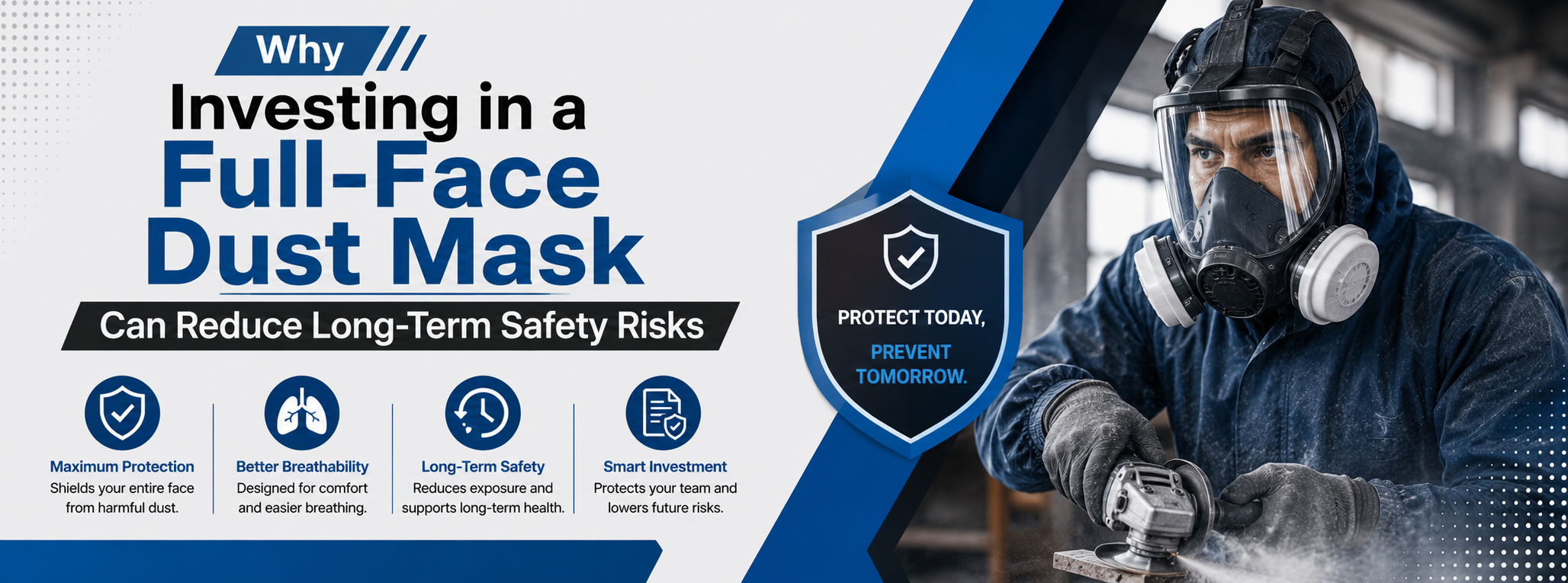
Daily dust exposure creates long-term health risks because standard airborne particles repeatedly bypass inadequate workplace controls. Workers inhaling hazards experience accumulative respiratory damage over months or years. Investing in professional protective equipment prevents these precise hazards and ensures strict alignment with health and safety compliance standards.
Industrial trades and skilled workers often feel fully protected across individual projects. This false confidence relies on basic face coverings that fail under demanding conditions. Microscopic particulate matter slowly accumulates in the lungs during every minor respiratory seal failure. This exposure directly threatens workers handling fire sprinkler system design and mechanical contracting installations.
Prioritising future worker health keeps daily operations running smoothly. A reliable full face dust mask eliminates the unpredictable variables found in basic disposable units. Relying on professional respiratory protection secures both staff wellbeing and long-term site compliance. Protective Masks Direct brings over 20 years of expertise helping health and safety managers eliminate these exact environmental risks.
How Do Small Protection Gaps Increase Compliance Risks?
Small protection gaps increase compliance risks by exposing workers to inconsistent respiratory defence systems. Weak or unsealed borders allow hazardous particulate matter to leak past the primary filter. This structural failure generates a false sense of security while actively breaching workplace exposure limits and site regulations.
Repeated microscopic breaches occur when workers constantly adjust ill-fitting equipment. Procurement and operations teams often notice an increase in recorded site exposure incidents when relying on basic gear. These continuous failures compound over time to create major liability and safety risks. Staff operating in highly demanding environments require complete physiological isolation from toxic agents.
Workers with facial hair face highly specific risks because heavy growth prevents tight contact on standard seals. Site managers must arrange alternative respiratory solutions if a secure face seal cannot be achieved. Ignoring this specific vulnerability ensures continuous minor inhalation of asbestos fibres and concrete dust.
Why Do Health and Safety Managers Recommend a Full Face Dust Mask?
Health and safety managers recommend a full face dust mask to guarantee integrated eye and respiratory protection. A single structured unit eliminates the dangerous gaps found between separate safety goggles and half masks. This design enforces consistent filter use and greatly reduces predictable long-term safety risks.
You gain a distinct tactical advantage when implementing equipment defined by certified standards and clear specifications. A professional face piece forces the user to wear all required protection simultaneously. Workers cannot accidentally leave eye protection behind when entering a contamination zone. This physical structure directly prevents isolated personal protective equipment failures on busy construction sites.
Our inventory provides practical and professional equipment you can trust to perform during critical operations. Reducing repeated failures requires a detailed risk checklist focused on integrated safety gear. Health and safety managers must mandate reliable face seals and certified filters.
What Role Does Visor Clarity Play in Site Safety?
Visor clarity matters for long-term safety because poor visibility forces workers to remove their equipment in hazardous zones. Scratched or misted visors lead to immediate danger in demanding environments. Clear panoramic visors ensure continuous operational awareness and prevent accidental exposure to toxic materials.
Healthcare and laboratory professionals require absolute visual precision when handling unstable compounds. A degraded visor surface forces the wearer into dangerous habits. Workers repeatedly lift their masks to inspect mechanical components or fire suppression systems. Complete field vision prevents these predictable behavioural risks.
Why Is Face Fit Testing Legally Required for Site Safety?
Face fit testing is legally required to confirm that a respiratory seal matches the individual facial structure of the worker. An untested mask provides unknown levels of protection under strain. Professional fit testing confirms the equipment performs to certified standards during rigorous daily operations.
Protective Masks Direct encourages strict adherence to certification codes and formal safety procedures. You cannot guess the operational integrity of personal protective equipment. Establishing proper testing protocols validates your financial investment and shields your organisation from regulatory penalties. Contact our support team to request professional face fit testing services for your staff.
How Do Reusable Units Control Future Procurement Costs?
Reusable safety units control future procurement costs by eliminating the constant purchasing cycle of disposable temporary alternatives. A structured reusable frame requires only routine filter replacements and routine functional maintenance. Consolidating your stock reduces long-term purchasing waste while providing vastly superior continuous worker protection.
Disposable items degrade rapidly under the environmental stress of life safety systems installation. Relying on paper or minimal fabric units leads directly to massive hidden replacement costs. Workers discard basic units multiple times a day due to moisture buildup and structural collapse. A reusable full face dust mask stops this erratic consumption and standardises the equipment lifecycle.
Procurement teams benefit directly from predictable inventory cycles and highly controlled budgeting. We highlight bulk deal savings for businesses and organisations aiming to secure vast operational teams. Investing in premium platforms early drastically cuts the long-term expenditure linked to safety equipment failure.
What Are the Most Reliable Options for Mechanical Contracting?
The most reliable options for mechanical contracting include certified heavy-duty respiratory equipment designed for active industrial applications. Premium masks combine impact resistance with low exhalation resistance to increase worker comfort. Certified protection systems offer measurable defence against hazardous particulate matter during extensive and complex shift work.
Selecting appropriate gear requires understanding the precise hazards your teams encounter daily. Airborne metals and deep concrete cutting require distinct filtration layers. The selected safety equipment must support extensive movement without losing primary seal integrity.
How Does the JSP Force 10 Protect Skilled Workers?
The JSP Force 10 full face dust mask protects skilled workers through a twin cartridge design and a highly durable panoramic visor. The anti-mist and anti-scratch coating maintains a clear field of vision continuously. A secure five-point harness ensures a comfort-focused seal during intensive physical tasks.
You can rely on this specific unit for proven protection during fire sprinkler system design and installation. The strong impact protection shields the user from debris while maintaining low breathing resistance. This specific engineering reduces worker physical fatigue to increase overall daily focus.
How Does the Sundstrom SR 200 Ensure Superior Performance?
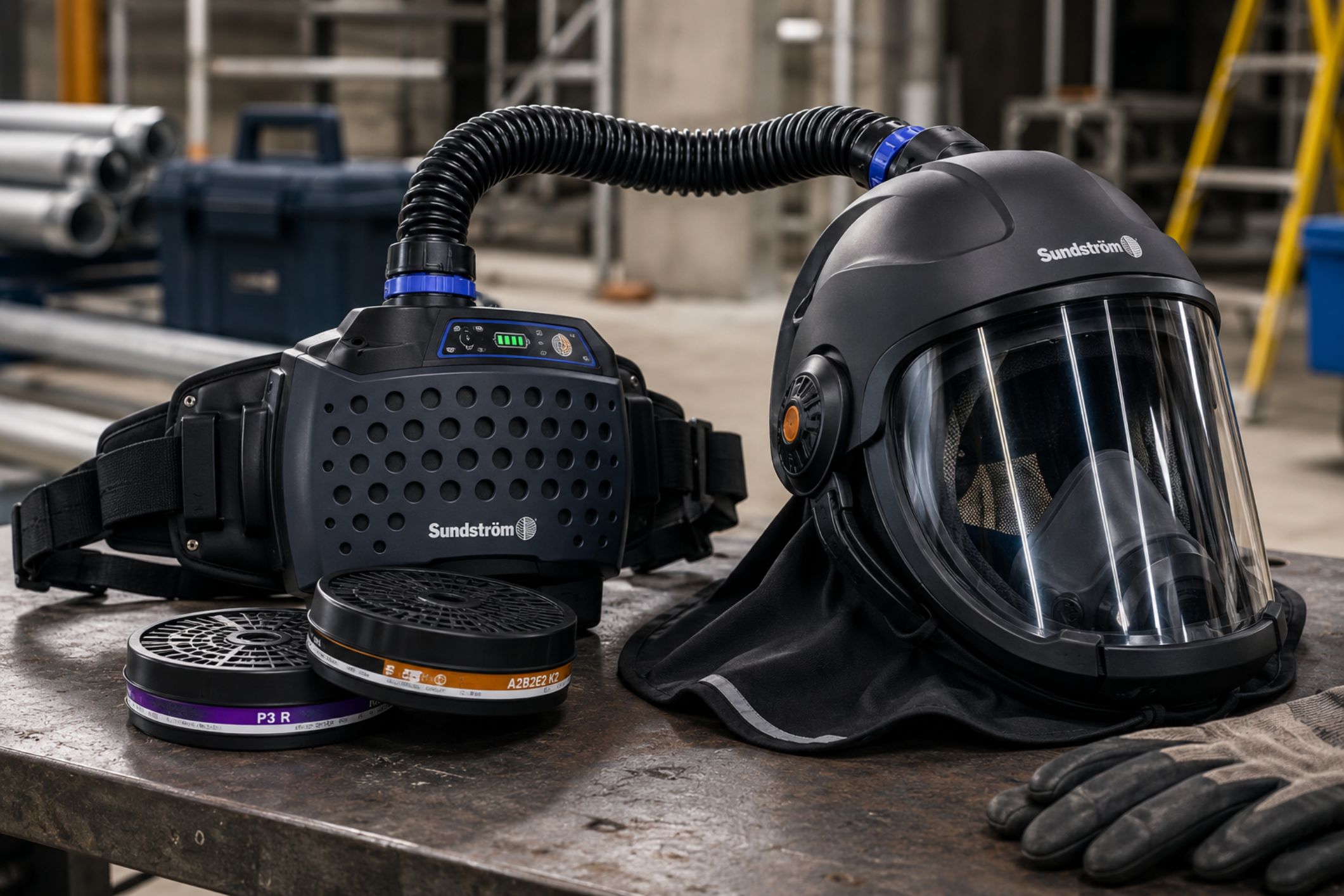
The Sundstrom SR 200 ensures superior performance by deploying a premium scratch-resistant polycarbonate visor alongside low exhalation resistance valves. The secure harness design prevents functional movement during complex mechanical operations. Broad Sundstrom filter compatibility allows procurement teams to adapt the unit for diverse environmental hazards.
Choosing this premium respirator provides deep operational versatility for hazardous material and environmental safety workers. The system adapts effortlessly from toxic waste disposal to fine woodworking shops. This flexibility makes it an exceptional inventory centrepiece for demanding multi-site organisations.
How Should You Maintain Equipment to Minimise Future Hazards?
You must maintain your equipment continuously to prevent secondary exposure risks and extend the operational lifespan of the unit. Establishing routine inspection habits ensures the prompt replacement of degraded valves or scratched visors. Proper storage procedures protect the soft seals from permanent structural environmental damage.
Leaving contaminated safety gear in transit vans or open toolboxes degrades the silicone structures rapidly. Dust settles inside the exhalation valves, rendering the entire device useless on the next shift. Treating maintenance as a continuous risk-reduction habit protects your capital investment and your site workers simultaneously.
Keep dedicated spare parts available in the procurement locker at all times. Direct line managers must enforce scheduled cleaning protocols using approved sterile wipes at the end of shifts. Shop online through our vast category pages to secure immediate access to certified replacement filters.
Frequently Asked Questions About Long-Term Respiratory Safety
Addressing frequently asked questions about long-term respiratory safety helps procurement managers and supervisors make informed purchasing decisions. You require specific technical data to clearly protect an active industrial workforce. Review these practical insights to understand exactly how advanced protective units perform across highly demanding site environments.
1.How Does a Full Face Dust Mask Reduce Long-Term Safety Risks?
A full face dust mask reduces long-term safety risks by locking out microscopic particulate matter systematically. High-grade integrated seals prevent the slow accumulation of dust deep in the lungs. This continuous protection stops cumulative respiratory damage and ensures strict regulatory compliance across all daily site operations.
2.Is A Reusable Full Face Dust Mask Better for Repeated Dust Exposure?
A reusable option is significantly better for repeated dust exposure because it provides absolute seal consistency. Disposable units degrade rapidly during heavy physical work or extended shifts. Reusable systems use certified twin filter cartridges that offer highly predictable filtration levels during demanding industrial installations.
3.How Often Should Replacement Filters Be Installed?
Replacement filters should be installed the moment breathing resistance noticeably increases or when particulate smells penetrate the mask interior. Strict maintenance schedules demand weekly physical assessments for continuous industrial use. Always stock bulk replacement parts to guarantee workers never operate with compromised filtration systems.
4.What Should Your Next Steps Be for Site Safety?
Your next steps for site safety involve securing certified respiratory defence gear for your complete mechanical workforce. Relying on inadequate face coverings directly guarantees future medical complications and severe regulatory failure. Integrating professional equipment immediately establishes a highly controlled safer environment for mechanical contractors.
Protective Masks Direct delivers reliable compliance and precision safety gear for the most demanding industries. Choosing a trusted full face dust mask directly reduces your corporate risk profile and minimises shift downtime. Contact our specific support team today if you need advice on selecting the right respiratory protection for your workforce. We are here to help you find practical, compliant solutions that protect your staff, reduce workplace risks, and keep your operations running safely and efficiently.